
From Watching Movies to Making Them: Meet Producer and LAFS Alum Joe Smith
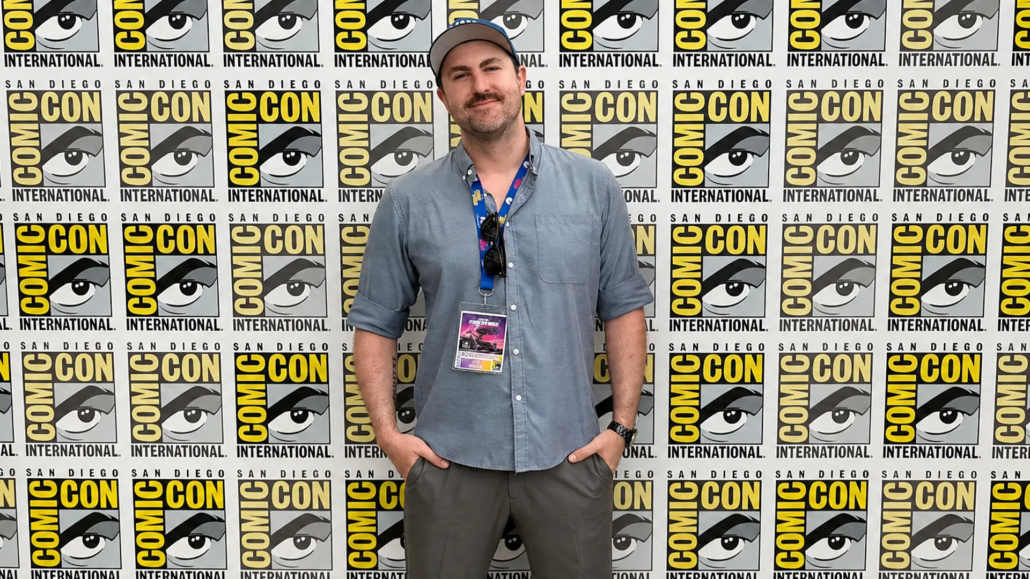
As this year’s Emmys Season comes to a close and Awards Season approaches, today we are bringing you a feature on one of our busiest alums who has produced shows and films such as Red Sonja, Mr. Beast, Southern Charm, Wahlburgers, for companies such as Eclectic Pictures, NBC, and Bright Road Productions before starting his own production company, Thirteenth Studios, earlier this year.
The 2011 Los Angeles Film School alum was born and raised in and around Boston, Massachusetts, but even while growing up three thousand miles away from Los Angeles, for Joe Smith, movies have always been more than something to watch.
For Joe Smith, movies have always been more than something to watch, long before he became a successful producer and entertainment executive, he was a kid staging productions with his action figures and his friends, imagining stories of his own. It was in these homemade productions that he first wore the producer hat, taking on every role of production as well as directing.
In high school, Joe’s movie-watching quota expanded significantly when he began working at a local movie theater–one of its perks, getting to watch movies for free, would further help influence who he’d eventually become as he consumed movies of all genres.
Yet, it would be after graduating high school, on a visit to Los Angeles, where quite serendipitously he would end up watching a movie with a friend at the now defunct Arclight Movie Theater on Sunset Boulevard—and discover The Los Angeles Film School sitting just across the street.
The hard-working entertainment executive remembers looking at The Los Angeles Film School and thinking it would be a pretty incredible place to continue his journey of learning how movies were made, here in the middle of Hollywood.
Eventually, he would make his way back to Hollywood and through those doors, beginning a career that has taken him from assistant desks and unscripted television to producing for MrBeast, developing and producing feature films, and now building the next chapter of his career as both an executive and founder.
Joe, you’re originally from the East Coast, right?
Joe Smith: Yeah, I grew up in and around Boston. You’ll hear it in my accent; I still have it. I moved to L.A. in 2010, so I’ve been here 16 years, but I grew up in Massachusetts. Very different from Los Angeles.
How did you first discover your love for filmmaking? Were you one of those kids who watched movies all the time?
JS: Growing up, I did not have any tangential or otherwise connection to the entertainment industry in any way whatsoever. I was purely just a fan. I mean, I still have the very distinct memory, and this is probably not unique to just me, a lot of people have the same one with the same movie, Star Wars: Episode IV – A New Hope, the original.
I’m a 1990’s kid, so my parents, like just about all 90s kids’ parents, had the three-VHS collection.
For people reading or listening to this, VHS is what they used to have way back when, that’s how we watched movies before streaming and before DVDs.
I remember watching Episode IV, sitting down in the living room at my house, I must have been 5 or 6. That was the first time I have a distinct memory of being like, “Oh, this is great! I’m in a completely different world with different people and lightsabers, heroes, and space battles.”
It completely blew my mind. I’m sure I’m not alone in naming that as the film that got me interested; it’s probably one of the top films cited for getting people excited about filmmaking.
I’m also a die-hard, die-hard, die-hard, die-hard Lord of the Rings fan.
Especially Peter Jackson’s interpretation. If anyone doesn’t know how those got made, look it up, because the whole making of story from pitching to New Line to the last-minute casting changes- all of that is absolutely insane. That process will never happen again, but it was such an incredible story.
It was the greatest gamble of all time that actually paid off.
At the time when I watched those films, I was still relatively young and learning about the behind-the-scenes of filmmaking and realizing that this is what people do for a living and all that sort of stuff.
Right. That must’ve been cool to get all of the insights as to how those were made, produced, and shot. Coming back to what you do every day, I can’t even imagine what producing films of that magnitude must’ve looked like.
JS: Definitely. Those films have something like 90 hours of behind-the-scenes footage, or something like that. That bts footage was definitely a great resource for the technical side of making a film, but it was also just so inspirational seeing people who, after those films succeeded, became the top of their game. Yet at the time, no one believed in those movies when they were being made.
They continued purely out of passion, and I still think that it’s pretty crazy how those films all got put together and happened.
That’s another one of my fascinations with producing, like how you take something of that magnitude and get everyone rowing in the same direction and get what needs to get done accomplished.
I honestly think it’s an absolute miracle anytime anything gets made, period.
I tend to not be as critical as perhaps some of my colleagues might be on things, as I think it’s just insane that anything gets done or made, as I have a great appreciation for everyone from top to bottom on any sort of crew. So many different priorities from one moment to another, different challenges that arise at various times, and varying personalities–yet somehow everyone comes together to make the same vision happen.
Are you primarily into those larger-than-life types of films or are there other styles that have had an impact on you?
JS: Yes, so many. A completely different type of film, and at the time smaller budget film was Before Sunset. What Richard Linklater did with that whole trilogy, but especially Before Sunrise, is kind of amazing, because it’s literally just Julie Delpy and Ethan Hawke walking around discussing things over one night– essentially, the entire thing is just a walk and talk
Which is kind of crazy in its simplicity, but it’s just so beautifully written, beautifully directed, beautifully acted–completely touching and heartfelt.
It’s just really inspirational to see that you can make something like this with more limited filmmaking resources.
I’m really big on character. I’m genre agnostic when it comes to movies, as long as the characters are good I’ll watch anything. It’s cliche to say, but it really does come down to good writing.
Yes, there’s nothing better than a well-written film! You mentioned that you worked at a movie theater as a teen, what was that experience like for you as a movie lover?
JS: Yes, I worked at a movie theater when I was 15 or 16.
I don’t know if I’ve taken more pride in my work keeping those people fed with popcorn and… and wiping down the counters, because I liked to keep that place spotless.
I took real pride in what was a minimum wage crappy job for a teenager, because to me, it wasn’t crappy at all. It was awesome, because I got free tickets. So, if I wasn’t at work then I was still there watching a movie. So, it was a great experience, and I was lucky enough to get to go to the movies for free as much as I wanted, because back then all of the movies weren’t as readily available like they are now.
Growing up, we didn’t have cable, or HBO or anything like that. We had networks like TNT and AMC that just played movies with commercials and everything. Obviously edited down to fit the time allotment, so to the theater was definitely, like, a bigger deal at that time.
It was such a different era, where even though we have a great variety of films and in much greater quantities the same curation of quality isn’t there anymore. Back then if it was going to theaters, you usually knew it was probably gonna be pretty good.
Again, bless people for trying, but I think there’s just a difference in people’s mandates and creativity, and they’re kind of losing that mid-budget $20 million to $60 million drama for the 35 year old plus demo. Nowadays, those go straight to streaming and I remember there being more of those in theaters. Using Before Sunrise as an example, that film probably wouldn’t go to a theater. Yet, I saw all three of those in the theaters.
Then there’s films like Drive, which was directed by Nicolas Winding Refn and starred Ryan Gosling. I actually saw that with a buddy of mine from The L.A. Film School, back when it first premiered. I believe we were actually still students at the time. We actually saw it at the Cinerama Dome back when it was open, we just literally went across the street from the school to watch it.
And THAT is a total movie theater movie.
Everything from the cinematography, the music, the sound editing, and the mixing–being in a theater for that movie just hit differently and we ended up seeing it like three times. We just kept going back.
Anyone that’s seen Drive knows it’s great and obviously I love it, but again it’s a very, very simple film when it comes to the premise, the storyline, and yet we went to watch it in the theater three times because we were like, “whenever this comes out on DVD, it’s not gonna be the same. So, like, let’s see this again.” and then we were like, alright, one more time just for good measure.
Yes, that definitely is a must experience in theaters at least once type of film. It also must’ve been pretty cool to watch it on the Cinerama Dome’s curved screen.
JS: Yeah, I know some people are split on that, but I always love the dome because for anyone that doesn’t know, and I guess everyone that doesn’t know should know soon if they go there when it reopens, the Cinerama Dome is different from most theaters as it is a big curved theater and the seats actually start like 30 feet back. So the front row actually is a good seat, but really there’s no bad seats in the dome. That’s why, that’s why I love that it’s coming back.
Ok, so tell us how did you end up in Los Angeles?
JS: I knew I wanted to go to Los Angeles, because once you have a few Februaries in Boston, you’ll fully understand why. I love Boston, but the slush, I don’t know how I did it growing up. Genuinely, every time I go back there in winter, I’m like dying–my blood is so thin now.
So, the summer after graduating high school. I did a four week accelerated certificate program with New York Film Academy that was out in Burbank. It was a way to get out here and see Los Angeles. The program helped you secure short-term living and all that stuff so it was convenient and was a way for me to kind of come out what living out here could be like for a month and to see how I like it and I did end up liking it very much.
I actually spent some time just going around Hollywood doing the touristy stuff, because I was technically a tourist who had never been to L.A. and with my love of filmmaking and everything. I know some people knock it, but I still love seeing the Hollywood sign, the Grauman’s Chinese Theater, and the Cinerama Dome– I’m very excited that it’s being opened again,
During that trip, I went and saw a movie at the ArcLight Theater and I remembered seeing The Los Angeles Film School, because it’s right across the street and thinking. “Oh, that’s a film school? What a cool location!” because it’s literally right there in the middle of Hollywood and it kind of just stuck with me.
So then. I got back home, and I was like, all right I definitely want to move to Los Angeles by hook or by crook, so let’s explore the options. I started researching different programs and The Los Angeles Film School was one of them. I saw that they had an accelerated film program, which was exactly the type of program I was wanting to do and so I applied and got in and made my move to Los Angeles.
I love that the The Los Angeles Film School found you in a way, by being in the right place at the right time. What was your student experience like?
JS: I really loved that the program I took had such a focused manner, where you got to focus a month at a time on a specific subject or area within the film industry.
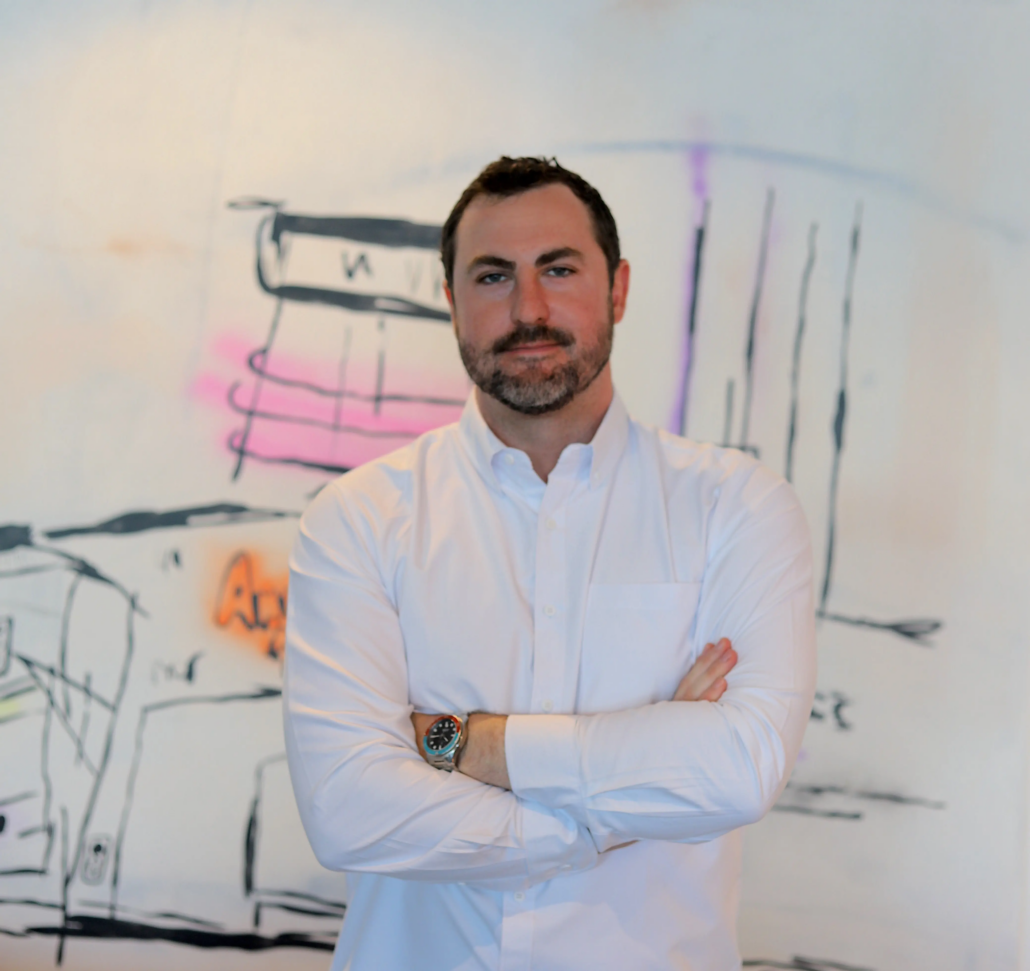
I remember there was a month that we focused on art direction and production design, and you keep going into different departments and you learn different ways of thinking with each area you learn. I really liked doing that sort of thing because I think especially as a producer, especially on the indie side, you have to be a swiss army knife. You don’t have to know everything about everything, but you have to know something about everything whether it’s the art direction, filming, or sound, etc.
For example, if you’re in production and they’re running into problems in the sound department for one reason or another, you need to know if it’s an equipment issue, a personnel issue, or a location issue.
Or when you’re tech or location scouting without your mixer there, you want to know, is this location going to be an issue for our sound team? Is this going to present any issues for the DP (Director of Photography) with lighting or for Crafty? Or production management, because there’s no holding area, and there might be days when we have 200 extras.
Right. Especially as a producer, there are so many things that you need to know and keep track of on a production.
JS: Yeah, as a producer you definitely need to know something about all of the departments and understand at least from a top-level how they work, so that you can anticipate what they’re going to need. I suppose it’s similar for directors, but definitely for producer roles.
I don’t remember what the class is called, but there was one where we learned about the soundstages, we reshot episodes, and rotated crew positions and that one was very helpful because I am such a hands-on learner.
I can read a book a thousand times, but it’s not the same as actually doing it. I’m such a tactile learner, so even if I’m putting something together at home, don’t even bother giving me the instructions sheet because I’ve really just got to dive in. Let me take a look at it, then just give me the screwdriver and I’ll start to figure it out. It’s the best way that I can learn.
So, that’s one of the things that I really liked about The L.A. Film School, that it is so hands-on.
Did you know that you wanted to be a producer back then or did you realize that later on in your career?
JS: Towards the end of my time at the school is when I realized I wanted to full-fledged go into producing. It wasn’t necessarily a conscious decision, but more of a realization that that’s what I’ve kind of always been doing.
Like with my GI Joes as a kid you know, when it was just me and my friends making you know fan films or whatever it was. I was the one putting the script together, putting the cast together, getting the equipment together and granted I had to also direct, shoot, and produce everything but because my friends were nice enough to participate, you know, we had fun doing it. Then, I’d be in the edit room, and I’d be physically editing, and trying to be critical of my own work, and sourcing music. I mean, again, it was, you know, fan fiction, Star Wars movies, and stuff I made up so I copyright wasn’t an issue because. Anyhow, when you put all that together and look at it from a 30,000 foot view, this is just what a producer does.
It’s just putting together everything in every department in whatever way they need to.
That was my realization. That I’d already been doing that all my life, by default I always seemed to take over all of the producerial duties, so it felt like the natural career or role to go into.
Then when it got to, like, the thesis filmmaking in school, I ended up producing a few for people, and then even after I’d graduated from the program, I actually went back and, and produced some of my friend’s thesis films who were still in school.
But I did have some friends in school that were really dead set on doing, you know, X, Y, or Z, and they go in and do one of the classes in one of the other apartments, and they’re like, oh, this is actually really cool and changing their career direction entirely.
What was post-graduation life like? Did you do any internships or just go straight into working on sets, etc?
JS: So after graduating, I popped around on a lot of crew stuff, just to keep learning and gaining more knowledge. Also you have to pay bills, I would take whatever was paying at the time.
I did a development internship at the Yari Film Group, producer Bob Yari’s (Landman, Mayor of Kingstown, Yellowstone, Crash, Agent Cody Banks) company that I got through the school, and then just kind of went up the assistant route and learned under really successful producers and just kind of kept going from there.
I got to PA on films like Shutter Island with Martin Scorsese and Leonardo DiCaprio and The Surrogates, which starred Bruce Willis and was directed by Jonathan Mastow, who had directed U-571, which was one of my favorite movies.
So that was cool, but I was a PA. I was doing lockups at night, um, which is just the worst. Yet, it’s still cool because those were $80 million movies and back then $80 million was a very big budget, even though it seems not that big now.
Shutter Island had huge sets, which was really cool, and kind of demystified the movie-making process a little bit for me.
I also worked on a movie called Noobz as a first AD, which starred Jason Mewes (Clerks, Jay and Silent Bob, Mallrats), Mindy Sterling (Austin Powers, Drop Dead Gorgeous), Zelda Williams, and a young Sabrina Carpenter. This movie was produced by an alum of The L.A. Film School and a majority of the crew was probably L.A. Film School people.
I also worked on some commercials. I remember doing one for JVC, the electronics brand which at the time paid me the most money I’d ever seen.
Commercials actually pay the most out of anything in production, which is crazy, I know. But if you’re a crew member on a commercial, you’re definitely making more money than someone doing a movie or a TV show, and likely working less.
So that’s how I got started, doing a few days here a few days there. It’s the way most careers start in this industry. Then it turns into relationships, relationships are so important in this industry and it really is how you get jobs consistently.
For example, building strong relationships would help you if a job was coming down to you and another person. So the more things that you do, the more people you meet, the better chance you have of expanding your network, and keeping in touch with those people and getting more jobs, which leads to more networking, which leads to more jobs. It’s a great, you know, kind of self-feeding cycle. You just gotta get your foot in the door a little bit, and whether that’s volunteering for stuff, starting with lower paying gigs, helping out friends, or interning and stuff like that.
It’s an absolute privilege that I get to do what I do, so I’m not ever going to begrudge it, but it is tough in the early days, but if you just keep plugging away the breaks come. It’s just it’s a patience game.
The old adage is you gotta kind of work for free for a bit sometimes, which is a shame, but it is kind of just like a hard truth. The whole, I worked hard my whole life to become an overnight success, that’s most everyone’s story in this industry.
So, even the overnight successes that you see, I promise you that they’ve been grinding at it for a long time too.
How would you describe your role in the industry?
JS: It’s the soup-to-nuts producer.
So, when I’m not on set like today, I’m in the office and working on finding scripts or working with writers to make scripts better, doing whatever you can to help them make the script better, your number one job is to get a good script to package.
Then, obviously agents and managers are pitching me their clients’ stuff all the time, and it’s all about finding something that interests me that I can really get behind, because it can take years, or even decades for some projects to get greenlit.
You have to champion the project, the script, the idea and that’s exactly what the job is.
It’s getting the script, identifying it, getting the rights, getting it locked in, and then once you have it, as producer your job is to champion it.
Once it’s ready you have to shop it around to the agents, managers, and finance companies and often times that is happening at the same time that you’re trying to attach talent– talent can be a known director or a big actor. Once those are attached it can become easier to find financing.
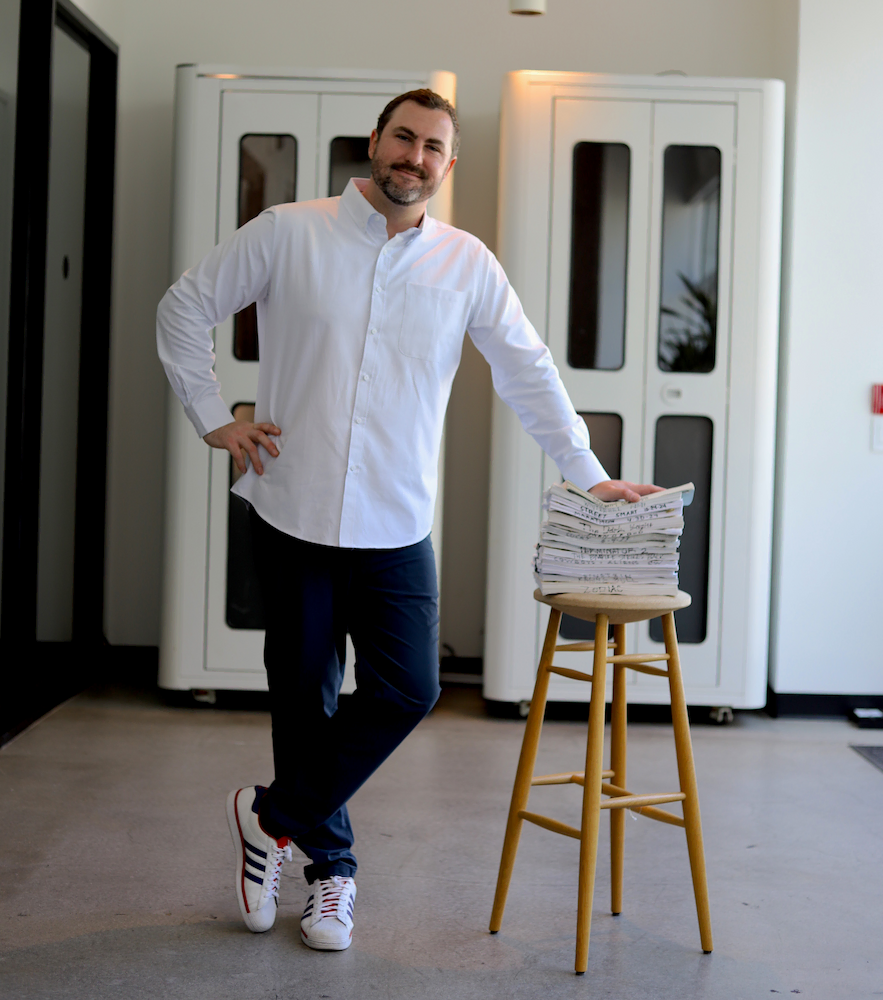
It’s funny, when it comes to a project actors are driven more by the director attached than the script. If it’s a really good director, they’ll do it if they don’t think the script is that great versus a project with a great script, but with an unknown director attached.
You could have the greatest script on Earth. and actors may still want to do it, but they’ll be more hesitant than if you don’t have a strong director attached. So, it’s a balancing act when you’re putting the package together. It has to be financeable.
Which is like a harder thing to do than it sounds because I have to be on the phone with sales companies and say like, if I put this actor and this actor in this genre, can you guys do anything with it? Okay, well, how much would you buy that for potentially?
Okay, five million dollars. All right. That means I have to get these two actors for that to happen and at a good rate so that there is enough budget left for the actual production.
So, it’s a delicate balancing act.
Once again it’s a networking and relationships thing. I keep talking about cliches, but they’re true. The Hollywood lunch is real.
You know, generally, as a producer you don’t want to have lunch alone.
So at least four days a week, I’m usually out at a lunch meeting. You’ve got to stay on top of.what the market’s dictating. You gotta stay on top of agents and managers and who they’re trying to push, and why, and what’s coming out soon.
Those meetings and lunches can also tell you what actor’s going to be particularly sought after or popular, and you can figure out if you can get to them first. Can you get an advanced screening of whatever their next movie is so that you can decide if they’re the right fit for your project.
Once the script is sold and key talent is attached you start moving into the pre-production logistics like location scouting, crewing up, researching tax credits, meeting with local film offices to see what their stipulations and requirements are, hiring a production services company if needed, creating the budgets, etc. Then everything moves into production, which most people are most familiar with and there are a million tasks that producers juggle from allocating departmental budgets to ensuring that production stays within budget to all of the little problems that can arise any given day. A good producer anticipates issues, because believe me issues will arise almost every day of production. With enough experience managing those becomes easier as you learn to see them coming.
And finally, in the post-production stage after a final edit is locked, we manage distribution rights for domestic and distribution. Then comes any promotion and marketing of the project as well as any additional things like if the project goes to a festival or the various premieres, you’d be involved with ensuring talent presence for those, etc.
And the funny thing is that I can be dedicated and present for each project, but in reality I’m juggling seven other projects or more all in varying stages of what I described.
You’ve worked on a lot of scripted as well as on a lot of unscripted hits like Mr. Beast, Wahlburgers, Southern Charm, do you have a preference?
JS: Scripted definitely has more runway than unscripted, but both are great. I like both.
Shooting schedules are a bit different for unscripted, where we’re only shooting two to three days a week and using the rest of the days to prep.
Working as a Senior Producer on Mr. Beast was cool. Obviously, he’s the biggest YouTuber on the planet, but aside from that it had really large budgets and so many cool things to produce.
I remember walking out onto the field behind the studio and they had a giant fake meteor created to crash on a house, which they lit on a fire first.
They brought up this big crane, um, lit it on fire and dropped it on the house. That’s definitely not something you see every day.
So for that show, anytime you walked around you just see a lot of crazy stuff happening because they’re always shooting multiple videos. So there’s always stuff being fabricated and random props coming in and out of the hallways, and you’re just like, I wonder what that’s for when it’s not something you’re producing.
So that was always a fun one.
But, I’m always working on ten things at once so I get a good balance of both and I like staying busy. You know, like Jerry Bruckheimer‘s been doing this for 50 years and he isn’t slowing down because in my opinion, it’s the best job on the planet. So I don’t want to slow down either.
And now you’ve started your own production company! Tell us about that.
JS: Yeah. Thirteenth Studios. I’m really excited about it.
I was the VP of Production at Eclectic Pictures before I decided to start my own company.
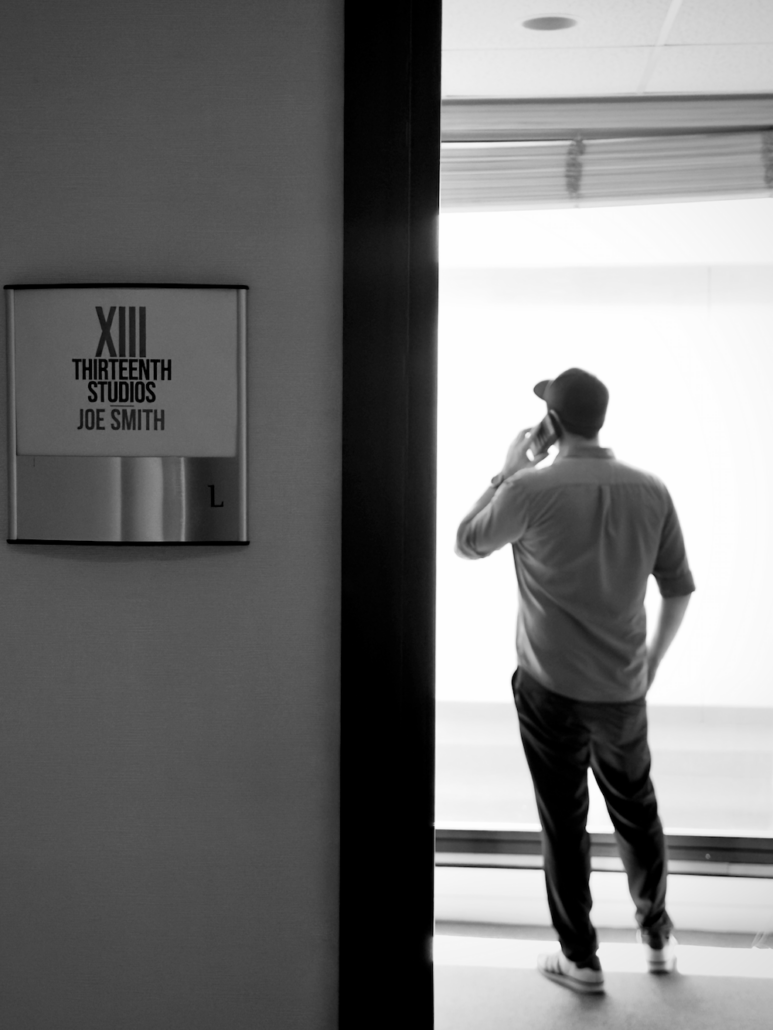
I want Thirteenth Studios to be the next Legendary Pictures. I want it to be synonymous with big fun blockbusters, my dream is to bring back the big budget action movies that we grew up on.
Going back to Bruckheimer, he’s one of my heroes, and when you see [Jerry] Bruckheimer Pictures attached to anything you know that it’s going to be some big, fun, experience whether it’s films like Top Gun or more recently F1, these high-octane memorable movies. That’s what I want to do–tentpole, blockbuster, high-energy, potential franchise type of productions.
I mean, just look at what Roy Lee at Vertigo built, you know, he started with The Grudge and The Ring, he took these Korean horror movies that the Western audience hadn’t seen and remade them and now he’s probably the most successful producer working today, doing all of the Godzilla movies and the Minecraft movie.
Now he’s doing all these huge things, he’s doing the live-action Battlefield film.
We had a call with him a couple of months ago trying to get him on a project and he was like “I’ve got like 14 movies I’m working on this year, I’m happy to be a sounding board, but I got… I got 13 or 14 movies going right now, so I can’t.”
That’s the dream.
Recently, what Amazon did with Project Hail Mary is absolutely genius too. That was such a good movie based off of Andy Weir’s novel. Ryan Gosling was the perfect casting, he absolutely nailed it. And it’s a big movie. It’s action, it’s adventure, it’s a bit of a mystery thriller, and it’s also heartfelt and emotional, and somehow it makes you fall in love with a puppet.
The fact that they actually made him a puppet, There’s some CGI enhancements, but it’s an actual puppet, so they really did something tangible that Ryan Gosling could react with.
In the past five years, if I could pick a movie that I could just pluck from history and be like that’ mine, I’m making it. It would have been Project Hail Mary. I absolutely adored it.
That’s what I want Thirteenth Studios to do, to make people feel like I did with that film from any of our projects.
Love that! We wish you continued success and luck with that project. What advice would you give to anyone who wants to pursue a career in the film industry?
JS: One thing I’d say to people is if you want to work in the industry, pick a department you’re really passionate about.
A lot of people say they want to write or direct, or whatever. I’m probably the only one that genuinely doesn’t in Los Angeles, but if you do, that’s totally great. We need writers, we need directors, but don’t get discouraged if you don’t start off in those roles. The important thing is to learn.
In general, get into a department that you really like and work your way up to learn as much as you can.
Remain open to opportunities and possibilities and put in the work.
If you want to pursue a career in producing, get your hands on as many scripts as you can and learn what kind of script is a good script is. Go to the library at the school, I know there’s a bunch of scripts in there, don’t just read your classmates’ scripts or friends’ scripts, but get real film scripts, they’re so easily accessible nowadays.
Early drafts are even better if you can find them, so that you can see what producers originally saw in this script and then watch the movie if you haven’t seen it to see what changes were made and to try to figure out why.
Next, I’d say be a voracious reader.
Lawrence Turman (The Thing, The Graduate) is a very, very famous producer, and he said,
“Producing is just taste and tenacity.” So, your taste and tenacity are really up to you.
Your taste is only going to get refined the more you read and the more you watch. Open your eyes to different filmmakers, different actors. These exercises will also broaden your options and perspective.
Again, think back to what Roy Lee did, he was watching Korean movies and said these would be great with Western audiences, he took that chance and now he’s got a multi-billion dollar film company.
Explore the Producing Concentration
Want to see how our Producing concentration works? Check out the program to learn more about courses, TechKits, and campus facilities. When you’re ready, request more info or start your application.
