
The Digital Proscenium: The Rise of the Cinematic Narrative in Gaming
Y
Updated September 15, 2026.
The boundary between Hollywood and the home console has reached a point of near-total evaporation. While the early history of the medium was defined by abstract shapes and mechanical loops, the modern cinematic game has shifted its priority toward the evocative power of the frame. By blending sophisticated direction with complex character studies, these titles have transformed gaming into a major venue for cinematic storytelling and character-driven drama.
How Does Performance Capture Make Video Games Cinematic?
Performance capture makes video games cinematic by replacing manually animated movement with real actors’ performances, unlocking the micro-expressions and subtext once reserved for film. The evolution of the cinematic genre is rooted in this human element: where character movement was once a product of hand animation, today’s industry-leading titles rely on full performance capture to drive their stories.
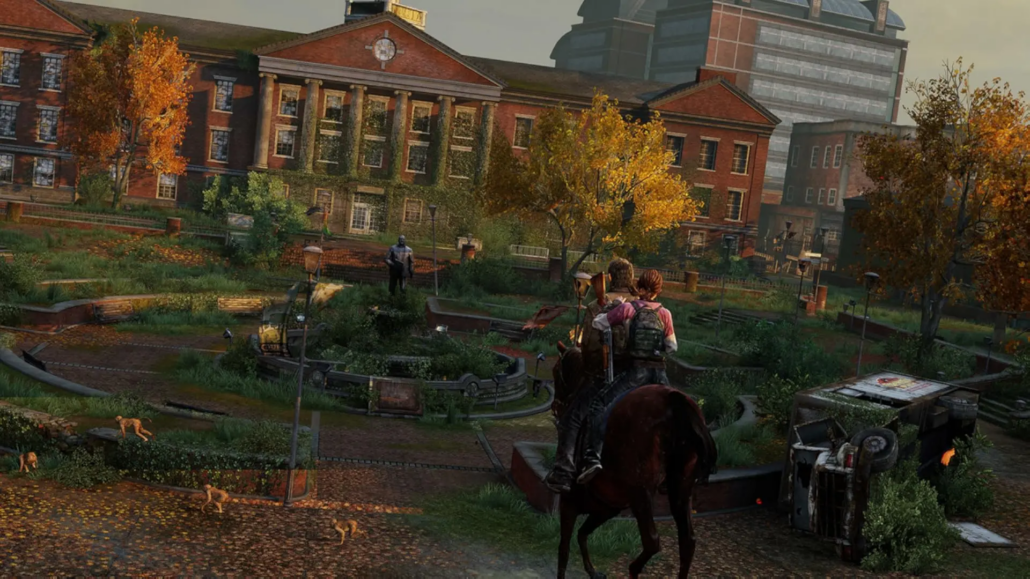
In The Last of Us series, the narrative is often found in the quietest moments – the micro-expressions of a protagonist or a shared look of hesitation between characters. This creates a “subtext” previously reserved for the silver screen, allowing for psychological realism where players connect with characters as human beings rather than digital avatars.
This concept is pushed further in Senua’s Saga: Hellblade II, where sensory realism and binaural audio are used to put the player directly inside a character’s internal struggle. By aiming to portray experiences associated with psychosis through detailed facial animation and 3D soundscapes, the developers turn a psychological journey into a visceral narrative mechanic. These games prove that the most “epic” stories in the medium are often the most personal ones.
How Do Video Games Use Cinematography and Camera Techniques?
Video games use cinematography through a “virtual lens” — applying real camera and lighting principles to guide player emotion just as a film director would. Beyond performance, this virtual lens plays a critical role in how these stories are processed, with developers now using sophisticated cinematography principles to shape how a scene feels.
Some titles, such as the 2018 reimagining of God of War, employ an unbroken “one-shot” technique where the camera never cuts away, creating an inescapable sense of intimacy and momentum. Others, like Red Dead Redemption 2, use atmospheric naturalism and intentional pacing. By forcing the player to physically exist within the world — cleaning a weapon, grooming a horse, or setting up camp — the game builds a slow-burn tragedy about the end of the American frontier. The world itself becomes a character, and narrative weight is built through the passage of time and environmental storytelling rather than a series of scripted plot points.
What Are Meta-Narratives in Video Game Storytelling?
Meta-narratives in games are storytelling techniques that play with the nature of storytelling itself, blurring the line between author, fiction, and player. As the medium matures, it is increasingly experimenting with these meta-narratives and transmedia techniques.
Alan Wake 2 represents a significant shift in this direction, seamlessly integrating live-action film into digital gameplay to create a surrealist “dream logic” that challenges the player’s perception of reality. Similarly, trailers for Grand Theft Auto VI suggest a style heavily influenced by social media aesthetics and smartphone footage, with the story increasingly filtered through “diegetic” lenses — media that exists within the game world itself. It mirrors our modern reality, making the narrative feel like a captured moment of cultural satire, and it shows that “cinematic” doesn’t always mean a widescreen epic; it can also mean gritty, vertical-video realism.
What Should Students Look For in a Cinematic Video Game?
Students studying a cinematic game should look past visual polish to the technical and creative decisions driving the narrative, focusing on how developers guide the player’s attention without removing player agency. Three elements are especially worth analyzing.
- Transition points: Notice how fluidity between moments is achieved through camera placement, lighting, and environmental design that align the player’s perspective with a scene’s intended emotional tone.
- Idle animations and movement weight: In games like Red Dead Redemption 2, the deliberate, heavy movement of the protagonist is a narrative choice designed to ground the player in the reality of the world.
- Environmental cues: Cinematic storytelling often relies on “show, don’t tell.” Learning to identify these techniques is the first step toward skills in digital direction and immersive world-building.
What Is Interactive Empathy in Video Games?
Interactive empathy is the quality that sets cinematic games apart from film: rather than watching a character make a choice, the player inhabits that character and carries the weight of it. While these games borrow heavily from the language of film, this participation is where their true power lies.
In a traditional film, the audience watches a character make a mistake; in a cinematic game, the player makes it. This transition from spectator to participant is what defines the modern era of gaming. For students of design and storytelling, the challenge is no longer just making a game functional, but making it resonant, creating a seamless experience where the “movie” never stops and the player’s agency becomes the final, most important ingredient in the script.
Take the Next Step in Your Creative Career
If you’re passionate about the intersection of technology and storytelling, gaming is one of the most exciting places that passion can lead. Performance capture, world-building, character design, environmental storytelling, and narrative design are the skills turning games into a major venue for cinematic drama, and they’re skills you can build.
At The L.A. Film School, our Animation program focuses on exactly this kind of interactive, story-driven creation. Explore it on campus or online to design the characters and worlds players inhabit. And if it’s the story itself that pulls you in, our Writing for Film & TV program develops the narrative craft behind unforgettable characters and scenes.
Request Info to explore our programs, or Apply Now and start creating stories players don’t just watch, but live.
FAQs: Cinematic Storytelling in Video Games
What is cinematic storytelling in video games?
Cinematic storytelling in video games is the practice of prioritizing the evocative power of the frame — blending sophisticated direction with complex character studies to deliver film-quality drama. While early games were defined by abstract shapes and mechanical loops, modern cinematic titles have turned gaming into a major venue for character-driven storytelling, to the point that the boundary between Hollywood and the home console has nearly evaporated.
How has performance capture changed video game storytelling?
Performance capture shifted character work from manual animation to full-body and facial capture of real actors, enabling genuine psychological realism. In The Last of Us, the story often lives in micro-expressions and hesitant shared looks — subtext once reserved for film. Senua’s Saga: Hellblade II pushes further, using detailed facial animation and binaural 3D audio to place players inside a character’s internal experience.
What is the “virtual lens” in cinematic games?
The virtual lens is how developers apply real cinematography principles — camera placement, movement, and lighting — to guide player emotion. The 2018 God of War uses an unbroken “one-shot” technique where the camera never cuts away, creating intimacy and momentum, while Red Dead Redemption 2 uses atmospheric naturalism and deliberate pacing so the world itself becomes a character.
What are some examples of cinematic video games?
Titles frequently cited for cinematic storytelling include The Last of Us (performance capture and subtext), Senua’s Saga: Hellblade II (sensory realism and binaural audio), the 2018 God of War (one-shot camera), Red Dead Redemption 2 (environmental storytelling), and Alan Wake 2, which integrates live-action film into gameplay.
What is interactive empathy in gaming?
Interactive empathy is what distinguishes cinematic games from film: instead of watching a character make a choice, the player inhabits that character and carries the weight of the decision. This transition from spectator to participant — where the player’s agency becomes part of the story — is what defines the modern era of cinematic gaming.
What should students study in a cinematic video game?
Students should look past visual polish to the decisions driving the narrative. Focus on transition points (how camera, lighting, and environmental design set emotional tone), idle animations and movement weight (deliberate movement as a narrative choice, as in Red Dead Redemption 2), and environmental cues that “show, don’t tell.” Analyzing these is the first step toward skills in digital direction and world-building.
What skills do you need to create cinematic games?
The field sits at the intersection of technology and storytelling, drawing on performance capture, animation, world-building, character design, and narrative design. Beyond technical polish, the real challenge is making an experience resonant rather than merely functional — using camera, lighting, environmental design, and character movement to convey emotion and meaning.
