
From TikTok to Cinema: The Film Terminology Behind Viral Trends
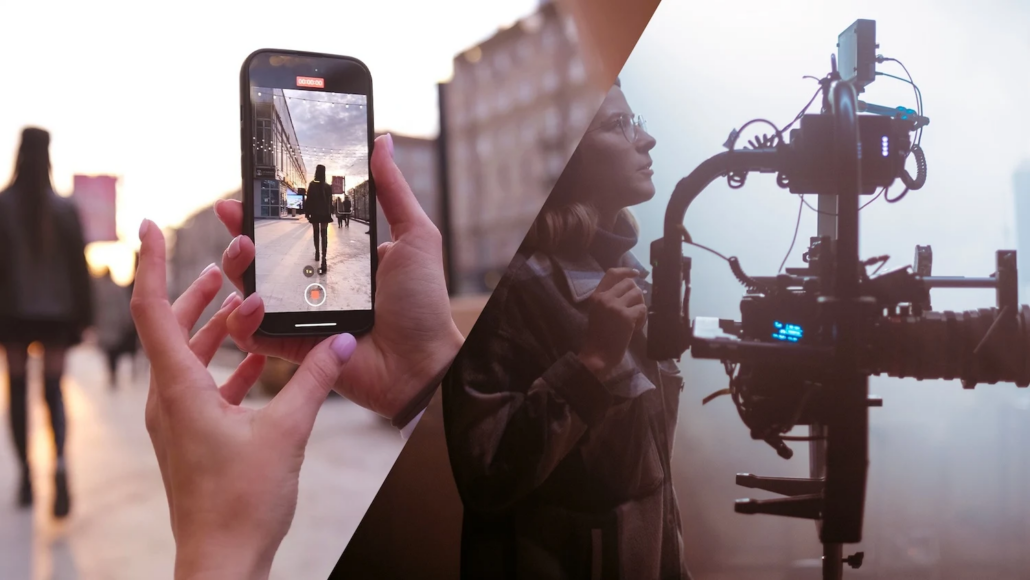
There is a massive divide between the language of social media and the language of professional filmmaking.
On TikTok, you might call it a “transition” or a “beat drop.” But if you walk into an edit bay in Hollywood and use those words, you might get a blank stare. To turn your social media hobby into a career, you need to learn the language of the trade.
The good news? You are already doing the work. The techniques that make a Reel go viral are often deeply rooted in cinema history.
Here is how to translate your social media skills into traditional film terms for your portfolio.
The “Beat Drop”
Traditional Film Term: Time Remapping (or Variable Frame Rate)
The Social Trend: We all know this one. You are editing a travel montage or a gym video. You slow the footage down for a dramatic moment, and then suddenly speed it up to a blur to transition to the next scene right when the bass drops in the song. It’s all about hype and energy.
The Film Term Definition: In the industry, this is Time Remapping.
Historically, this was done by physically over-cranking a camera (recording more frames per second) to create slow motion. Today, it refers to the digital manipulation of the speed of a clip within a single shot. It isn’t just “slow mo”; it is the fluid ramp between speeds.
Classic Example: The fight scenes in 300 or Sherlock Holmes, where the action slows down to emphasize a specific physical detail (a punch connecting) and then ramps back up to real-time.
The “Infinite Loop”
Traditional Film Term: The Hidden Cut (or Masking)
The Social Trend: A creator walks past a pillar, or whips the camera quickly to the right, and suddenly they are in a new location. The video loops perfectly, tricking the viewer into watching it twice. It’s a retention hack.
The Film Term Definition: Filmmakers call this a Hidden Cut, often achieved through Masking.
This is a technique used to hide the edit point to create the illusion of a “Long Take” (a shot that never cuts). By whipping the camera (a “Whip Pan”) or having an object obscure the lens (a “Wipe”), the editor can secretly cut to a new take while the screen is blurred or black.
Classic Example: Alfred Hitchcock’s Rope (1948) or Sam Mendes’ 1917 (2019). These films used hidden cuts to make the entire movie feel like one continuous, uninterrupted event.
The “Magic Snap”
Traditional Film Term: The Match Cut
The Social Trend: A fashion influencer snaps their fingers in their bedroom, and on the exact frame of the snap, they cut to the same pose on a beach in Italy. It’s satisfying because the composition aligns perfectly.
The Film Term Definition: This is a Graphic Match Cut.
A Match Cut is one of the most sophisticated tools in editing. It isn’t just a cool transition; it is a way to create a metaphorical link between two different scenes. The editor cuts from one shot to another where the composition, action, or shape is nearly identical, implying a connection between the two places or times.
Classic Example: 2001: A Space Odyssey. The famous cut from the prehistoric bone thrown in the air to the futuristic spaceship floating in orbit. It connects the first tool of man to the latest tool of man in a single frame.
The Takeaway
Don’t delete your TikToks – analyze them.
When you understand the Time Remapping, Masking, and Match Cuts behind your favorite trends, you stop being just a “content creator” and start becoming a filmmaker. The tools are the same; only the vocabulary changes.
Read More: Movie Terminology Our Instagram Followers Are Curious About
