
What Watching Bad Films Can Teach You
We tend to celebrate great films: the ones that win awards, dominate box offices, and resonate with our deepest emotions. But there’s a strange, under-appreciated corner of cinema that deserves our attention too: truly bad films.
Not mediocre. Not forgettable. We’re talking about the gloriously misguided, bafflingly executed, “how did this even get made?” kind of bad.
Good films often hide their seams. Bad films put every mistake on display. It’s easy to laugh, but it also sharpens your eye. You start to recognize pacing issues, weak writing, and technical missteps much more clearly.
Movies like Troll 2, Hard Ticket to Hawaii, Birdemic: Shock and Terror, and Gooby may not be cinematic masterpieces, but they offer some surprisingly valuable lessons you won’t always get from polished perfection.
Let’s take a closer look at some terrible movies that can do us good.
Troll 2: A Filmmaking Fiasco
“They’re eating her… And then they’re going to eat me… OH MY GOD!!!”
Calling Troll 2 (1990) a failure isn’t just about it being “bad.” It’s about how many fundamental parts of filmmaking can go wrong at once. And that’s exactly what makes it so fascinating.
To start, Troll 2 has literally nothing to do with trolls, and it isn’t the second film in a series. The film originally arrived as an Italian feature about goblins, with producers ultimately retitling it Troll 2 to try to draft off the meager success of the unrelated film Troll (1986) in the video rental market.
The plot of Troll 2 is confusing and often nonsensical. The premise (goblins turn people into plants so they can eat them) is never developed in a coherent way, and scenes don’t build logically from one to the next. Costumes, makeup, and effects are extremely low-quality… even by the standards of its time. The “horror” elements also never feel threatening, which undercuts the film’s intended genre.
Ironically, all of these failures combine into something truly unique. The awkward acting, strange writing, and tonal confusion create moments that are unintentionally funny and endlessly quotable. Midnight screenings, quote-alongs, and fan events have turned Troll 2 into a shared cultural experience.
The lesson: audiences don’t just value quality. They value uniqueness, even when it comes wrapped in disaster.
Birdemic: No Heir to Hitchcock
“Here they come!”
Unlike Troll 2, Birdemic: Shock and Terror (2010) at least delivers on what its title promises: birds… causing a disaster. But even here, the title tells you more about the intention than the actual execution.
Clearly inspired by the film The Birds (1963), the name Birdemic is basically a mashup of “bird” and “epidemic,” signaling a nature-gone-wrong horror in the vein of the Hitchcock classic. You’re expecting tension, dread, and escalating chaos.
But the infamous CGI birds–stiff, copy-pasted, and often very out of scale–make it hard to take the epidemic part seriously. Instead of fear, the attacks create confusion and laughter. Combine these repetitive and long sequences of “attacks” with visibly bored actors and you’ve got a formula for an exceptionally bad film.
If Birdemic teaches us anything, it’s this: technological ambition has to match the actual capacity to execute it. The issue is that the film builds its entire premise around digital bird attacks without having the tools, budget, or workflow to make them convincing.
But for cinephiles, that’s part of the appeal of Birdemic: Shock and Terror. The gap between what the film wants to be and what it is becomes the whole experience.
Hard Ticket to Hawaii: More Props, Please!
“This is for the Molokai cops.”
If Birdemic is about overreaching with technology, Hard Ticket to Hawaii (1987) is about what happens when you never rein in your ideas at all. This is a film that seems to operate on one guiding principle: “Wouldn’t it be cool if…?”–and then immediately does that thing, regardless of whether it fits.
Bazookas, assassins, radioactive toilet snakes, frisbee weapons… individually, these could be memorable moments. But the film strings them together with little narrative logic. On top of that, these scenes are treated with deadly seriousness, which somehow makes them even more ridiculous.
Without structure, however, even the wildest moments feel random instead of exciting. It creates the feeling that the film is constantly trying to keep your attention rather than earn it.
It’s a good reminder that more intensity does not necessarily equal more buy-in from your audience.
Gooby: Can’t Find a Heart String
Budget: $6.5 million.
Box office: $3,234.
Gooby (2009) is a very different kind of “bad” movie. It’s not chaotic like Hard Ticket to Hawaii or technically infamous like Birdemic. Instead, it’s a quieter, more uncomfortable failure… and one that’s incredibly useful to study. Because on paper, it should work.
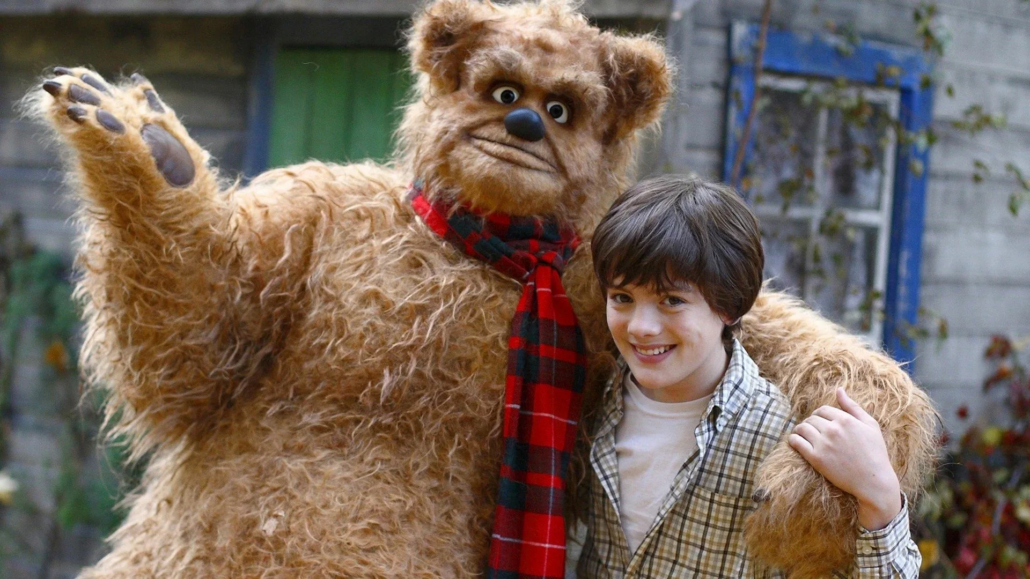
Gooby is essentially a large, furry, teddy-bear-like alien/imaginary friend who appears in the life of a lonely young boy named Willy. The idea is that Gooby is a comforting companion–part protector, part friend–who helps the child cope with fear, change, and emotional stress.
But the design lands in a strange middle ground: too realistic to feel like a cartoon, too artificial to feel alive. The result is… unsettling.
The movie clearly wants to be heartfelt. It deals with loneliness, childhood fears, and emotional growth. But the performances, dialogue, and staging don’t quite support those themes. Scenes that are meant to be touching end up feeling awkward or hollow… because a bizarre, uncanny bear-man is always lurching into the frame. Even Eugene Levy can’t save Gooby from itself.
Gooby has developed a kind of curiosity-driven online following. Not quite the loud cult status of Troll 2, but enough that people revisit it to figure it out. (Would it surprise you to learn that Nathan Fielder is a fan?)
For film students and cineastes, that makes it valuable. It’s a case study in how small miscalculations can compound into something unforgettable for the wrong reasons.
The Beautiful Disaster of Bad Cinema
Watching bad films isn’t just a guilty pleasure. It’s a different kind of film education. They teach you what doesn’t work, why it doesn’t work, and how thin the line can be between brilliance and disaster. More importantly, they remind you that creativity is messy, unpredictable, and sometimes gloriously wrong.
So the next time you come across a notoriously bad movie, don’t avoid it.
Watch it. Learn from it.
And maybe enjoy it a little more than you expected.
