
From Bedroom Beats to Professional Tracks: How Music Production Has Changed
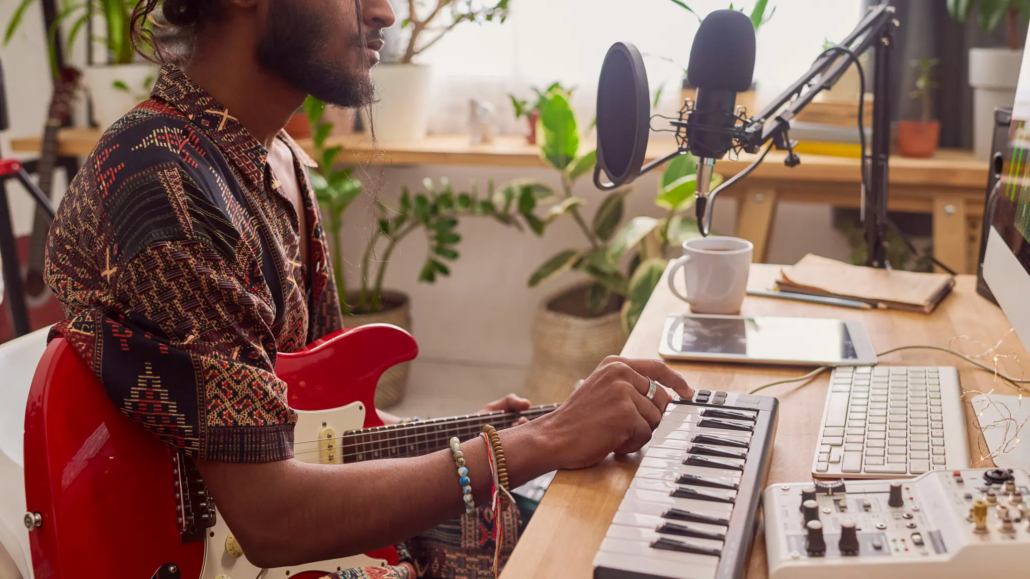
There was a time when making a record meant booking studio time, hiring engineers, and spending money you might not have on equipment you’d never own. That time is over. Today, some of the most compelling music in the world gets made in spare bedrooms, apartment closets, and converted garages — by independent artists with laptops, studio monitors, and a vision. If you’re serious about building a career in music production, understanding that shift is your foundation.
Why Music Production No Longer Starts in a Traditional Studio
The traditional recording studio was a gatekeeper. Access to the room, the gear, and the industry relationships that came with it determined who got to make professional music. That model started cracking in the 1990s with affordable digital audio workstations and essentially collapsed in the 2000s when powerful music software became accessible to anyone with a computer.
Today, a home studio can produce tracks that rival those from major studios a decade ago. What you need: a solid audio interface, a condenser mic in a treated space, a well-configured DAW, and the skills to use all three.
The barriers haven’t disappeared — they’ve shifted from access to knowledge. What separates a bedroom producer from a professional isn’t the room anymore. It’s the craft.
Independent Artists Have More Creative Control
The move away from traditional studios didn’t just change where music gets made. It changed who controls the creative process. Independent artists no longer need a label to greenlight a project, a studio to host it, or a distributor with physical reach to get it into listeners’ hands.
They decide the sound, the timeline, the release strategy, and the aesthetic — from the first MIDI note to the streaming upload. That creative freedom comes with real responsibility. The modern music producer career means wearing multiple hats: composer, engineer, mixer, and sometimes the business mind behind the whole operation.
The Rise of the Bedroom Producer
The democratization of music technology is one of the most significant stories in the modern music industry. Consider what’s now accessible at a fraction of what a single studio session used to cost: DAWs like Ableton Live, Logic Pro, and FL Studio; virtual instruments that replicate orchestras, vintage synths, and rare acoustic gear; sample packs that once required a full recording session to capture.
The bedroom producer is no longer a novelty. Billie Eilish recorded her debut Grammy-winning album entirely in her brother Finneas O’Connell’s bedroom on a modest Logic Pro setup — a condenser mic, a Universal Audio Apollo interface, and a pair of Yamaha HS5 monitors. Genres like lo-fi hip-hop, bedroom pop, and hyperpop exist largely because producers with limited resources found creative ways to work within constraints and turned those limitations into a signature sound.
Home Studios Can Still Produce Release-Ready Music
The question isn’t whether home studio music can be professional. It can. The question is whether the producer understands what “professional” actually requires: clean recordings with proper gain staging, frequency-aware mixing and intentional sound design, and critical listening skills built through study and repetition.
Producers who invest in understanding the technical side of their setup — not just the creative side — are the ones consistently turning out release-ready tracks.
Technology Changed the Producer’s Role
The DAW isn’t just software — it’s the modern producer’s entire studio in a single application. Today’s DAWs handle recording, arrangement, MIDI programming, beat making, and mixing. Virtual instruments have expanded what’s sonically possible for producers at every level, from realistic strings to fully synthesized custom sounds.
Sound design has also become a core production skill rather than a specialist discipline. Understanding how to shape a sound from scratch — through synthesis, sampling, or audio processing — is what separates producers with a distinctive sonic identity from those who end up sounding like the same preset.
Remote collaboration has redefined what it means to work with other artists. Producers and artists now co-write across continents, sharing sessions through cloud-based platforms, trading stems, and communicating in real time. The geography of the music industry has essentially dissolved.
Read More: Tips for Soundproofing Your Home Studio
What Still Separates Amateur Beats From Professional Tracks
Access to tools doesn’t automatically produce professional results. One of the most common gaps between amateur and professional work is arrangement — the deliberate structuring of a song so every element earns its place and serves the listener. That means knowing when to strip back, when to build tension, and how to create movement that feels inevitable.
Many producers get stuck in loop mode — a great eight-bar idea that never resolves into a full composition. Learning to develop musical ideas across a full arrangement is one of the most important skills in music production, and it gets underemphasized in the gear-and-plugin conversation.
Audio mixing is the invisible architecture of a great track. When it’s done well, the listener doesn’t notice it — they just feel like the song hits. Developing a professional ear means listening analytically rather than emotionally, referencing against commercially released music, and trusting your monitors over headphones in a treated room.
Home Studios Require Creative Problem-Solving
Acoustic treatment is one of the most under-discussed topics in home recording. The physics are straightforward: bass frequencies build up in corners, flutter echoes color recordings in ways that surface in mixes, and a great microphone in an untreated room will sound worse than a good mic in a well-treated one.
You don’t need a perfect room. You need a room you understand. Microphone technique, source placement, and recording environment awareness cost very little to develop and pay dividends on every session.
The gear acquisition spiral is also a reliable way to stay broke and underproductive. More plugins don’t make better music — deeper knowledge of fewer tools does. A simple, well-understood signal chain beats a bloated setup every time.
Independent Distribution Changed the Career Path
Music distribution no longer requires a label, a physical supply chain, or a radio promoter. Platforms like DistroKid, TuneCore, and CD Baby let independent artists put music on every major streaming platform, and a track by an independent artist sits alongside major label releases in the same playlist ecosystem.
Producers who build careers today understand how to create content around their process, build community before a release, and develop a recognizable creative identity that audiences follow between drops. And for artists releasing to Spotify, the platform’s editorial playlist pitching tool — available through Spotify for Artists — is one of the most underused levers independent musicians have.
The modern music producer career sits at the intersection of artistry and entrepreneurship. Business literacy isn’t optional anymore. That means understanding how distribution royalties are structured, how sync licensing works, and how to build and protect a brand as an independent creator. It’s why Entertainment Business programs are increasingly relevant to music producers — and why serious music production education incorporates the industry’s business alongside technical and creative training.
Global Examples Worth Studying
Some of the most significant movements in digital music production started in home setups. Lo-fi hip-hop is a billion-stream genre built largely by solo independent producers. Bedroom pop artists like Clairo and Rex Orange County turned home recordings into major label deals. Afrobeats producers in Lagos are creating global hits without Western industry infrastructure. K-pop draws heavily on independent global producers collaborating remotely. Indie electronic scenes from Berlin to Buenos Aires are built entirely outside traditional studios.
These aren’t edge cases. They’re where the industry is moving.
How Online Music Production Education Fits Today’s Industry
An online music production degree lets students build real skills — DAW operation, recording, arrangement, mixing, sound design — while working in the same distributed, self-directed way that professional producers work every day. It’s not a workaround for “real” education. It reflects the actual workflow of the modern industry.
For producers who already have a home studio setup and want to understand why something works, not just that it does, a structured program provides what self-teaching tends to miss: theory, feedback, and technical depth.
Every track is evidence. A music production degree structured around real creative output means you graduate with a body of work, not just a credential.
How Aspiring Producers Can Keep Growing
Finish tracks. Not perfect tracks — finished ones. A completed song, even a flawed one, teaches you more than an unfinished loop you keep tweaking. Completed tracks give you something real to get feedback on, and a body of work is what opens professional doors.
Feedback from people you respect — peers, instructors, working professionals — accelerates growth faster than solitary work. The producers who grow fastest aren’t the most naturally talented. They’re the ones who take feedback seriously and implement it.
FAQs: How Music Production Has Changed
What is a bedroom producer?
A bedroom producer creates music from a home setup rather than a traditional recording studio, typically using a laptop, a DAW, an audio interface, a microphone, and a MIDI controller.
Can professional music be made in a home studio?
Yes. Professional-sounding music can be made in a home studio when the producer understands recording quality, arrangement, sound selection, mixing, and critical listening.
How has music production changed in recent years?
It has become more accessible because of affordable software, virtual instruments, online collaboration tools, home recording equipment, and independent distribution platforms.
What skills do music producers need today?
Arrangement, recording, editing, mixing, sound design, collaboration, music theory, project organization, and audience awareness.
Do producers still need traditional studio experience?
Traditional studio experience can be valuable, but it’s no longer the only path. Many producers now build skills through home studios, online learning, remote collaboration, and independent releases.
How does online music production education fit today’s industry?
An online music production degree can help students build technical skills, creative workflows, and portfolio projects while learning in a format that reflects how many producers already work.
What should beginners focus on before buying more gear?
Finishing tracks, improving arrangement, learning their DAW, recording clean audio, developing their ear, and understanding how each production choice serves the song.
Ready to Build Your Production Career?
The tools exist. The access exists. The global audience exists. What determines whether you build a real career in music production is what you decide to do with it.
The LA Film School offers both on-campus and online programs in Music Production and Audio Production:
Music Production (On-Campus)
Music Production – Bachelor’s Degree (Online)
Audio Production – Bachelor’s Degree (On-Campus)
Audio Production – Bachelor’s Degree (Online)
Request More Information | Apply Now