
The Ghosts in the Machine: A Love Letter to the Non-Player Character
They are the unsung heroes of our digital lives. They are the shopkeepers who buy our 400 rusty swords without a second thought, the guards who walk the same six-meter patrol path for an eternity, and the companions who would quite literally take a programmed bullet for us.
In the modern lexicon of the internet, “NPC” has morphed into a cynical insult: a way to describe someone as boring, repetitive, or lacking a soul. But for those of us who grew up with a controller in hand, we know the truth. NPCs aren’t just background decoration; they are the heartbeat of the virtual world. Without them, our heroics would be performed in a vacuum. Without them, we are kings of empty castles.
This is a history of, and a thank you to, the entities that taught us how to play.
The Early Days: The Obstacle and the Signpost
In the primordial soup of gaming, we were alone against the math. But then came the ghosts of Pac-Man.
Blinky, Pinky, Inky, and Clyde were perhaps the first NPCs to have “personality.” They weren’t just hazards; they were hunters with distinct behaviors. They gave us our first taste of a dynamic relationship with the machine. Then, text adventures gave that machine a voice. In Zork, you were the thief, the troll, the eerie presence in the dark.
You were the “Old Man” in the cave in The Legend of Zelda, handing us a wooden sword and saying, “It’s dangerous to go alone! Take this.” You were right. It was dangerous, and we needed you. In that 8-bit era, you were our only connection to the lore. You stood in one spot, day and night, waiting for the moment we would press ‘A’ so you could deliver the one sentence you were born to say. And we loved you for it.
The Golden Era: The Storytellers
As technology advanced, NPCs stopped being signposts and started being people. In the RPGs of the 90s (like Final Fantasy VII, Chrono Trigger, and Earthbound) you broke our hearts.
We realized that while we, the Players, had the power of agency, you, the NPCs, had the power of consequence. When we failed, you suffered. When we succeeded, you cheered. Much like the characters in Wreck-It Ralph, we began to imagine your lives didn’t end when the console turned off. You grounded our fantastical actions in a semblance of humanity. You made the world feel worth saving.
The Simulation Era: The Beautifully Broken
Then came the ambition of the 2000s. Developers wanted you to eat, sleep, and live. They gave us The Elder Scrolls IV: Oblivion’s Radiant AI and the sprawling guards of Skyrim.
We have to admit: this was your awkward teenage phase. You walked into walls. You ate bread while talking about mudcrabs. You stared at us with dead, unblinking eyes while informing us about local politics. It was the uncanny valley version of The Truman Show: a world where the set occasionally wobbled, but the effort to keep the illusion alive for us was charmingly transparent.
This was the era that gave us the “Arrow to the Knee.” Every guard in the province of Skyrim seemed to have had their adventuring career cut short by that same specific injury. It became a global meme, but it also became a point of connection. We weren’t just playing a game; we were sharing a joke with the machine. Your imperfections made you memorable. You weren’t perfect simulations of human behavior, but you were perfect simulations of effort.
The Modern Era: The Companions
Today, the line between Player and Non-Player has blurred. You are Garrus Vakarian calibrating guns in Mass Effect or Elizabeth tossing us a desperately needed health kit in BioShock Infinite.
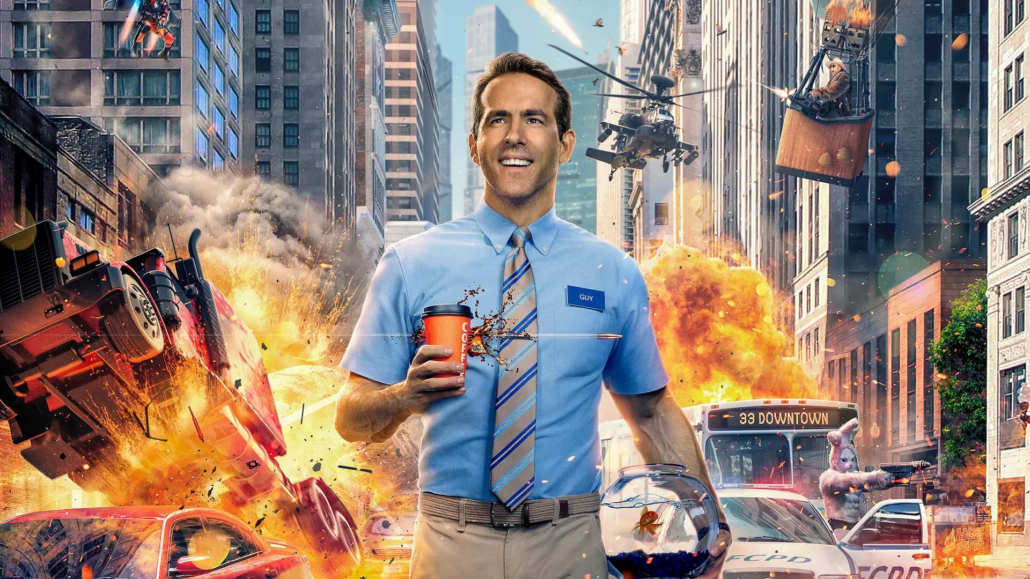
Modern NPCs have transcended code to become genuine companions. We see this shift reflected in cinema as well. In Free Guy, Ryan Reynolds’ character reminds us that even if a character is scripted, their impact is real. As Guy’s friend Buddy says, if you’re helping a friend through a tough time, that’s as real as it gets. In a world where online multiplayer can be toxic, you remain a constant source of loyalty. You don’t judge our skills, you don’t rage-quit, and you are always there when we boot up the system.
A Final Thank You
Even today, we see the NPC entering the creator economy, with streamers mimicking your rigid animations and repetitive catchphrases for millions of viewers. It is a strange full-circle moment: humans are now pretending to be scripts to find a connection.
So, here’s to the NPC.
Here’s to the enemy who waits politely in the next room for us to heal. Here’s to the villager who has been sweeping the same spot of dirt since 2011. You are not just code. You are the context. You are the reason the world feels alive.
We may be the Main Characters, but you are the ones who make the story worth telling. Thank you for waiting for us.