
Autotune Is an Instrument: The Aesthetic History of Pitch Correction
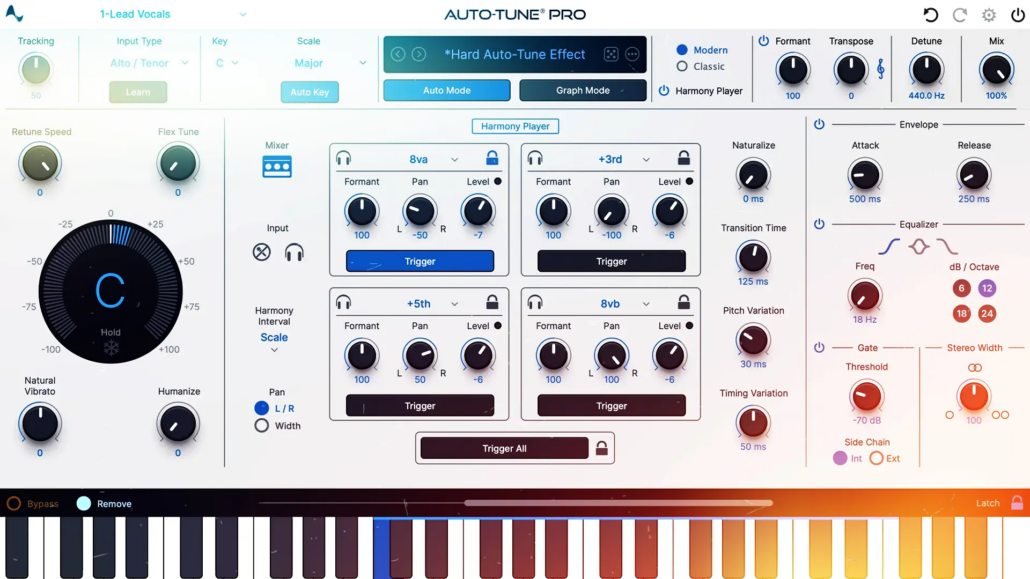
You’ve heard it a thousand times, whether you clocked it or not: that shimmering, quantized vocal glide that turns a human voice into something closer to a synth line. Autotune started as damage control, a way to quietly nudge a flat note back into key before anyone in the control room noticed. Somewhere between an oil field and a chorus that ruled radio for a decade, it became something else: an instrument, played on purpose. This is the history of pitch correction, and why the argument over whether it should exist is really an argument about whether a machine can replace skill, or just changes what skill means.
The Sound Everyone Recognizes, and No One Agrees On
Ask a room full of musicians what they think of Autotune and you’ll start an argument in about four seconds. To some, it’s a crutch that lets anyone sound like a technically flawless singer. To others, it’s a legitimate creative tool, as expressive in the right hands as a guitar pedal. Both camps are talking about the same pitch correction software, and both have half a point. That tension, between fixing a voice and reshaping it, is exactly why the story of this robotic vocal effect is worth knowing if you’re headed anywhere near a mixing board.
An Unlikely Origin: From Oil Fields to the Recording Booth
The Seismic-Data Algorithm Behind the Sound
Autotune’s origin story has nothing to do with music, at least not at first. In the late 1980s, Andy Hildebrand was a geophysicist using autocorrelation, a technique for spotting repeating patterns, to interpret seismic data for oil companies hunting underground deposits. That same math is remarkably good at finding the fundamental frequency of a sound wave. Feed it a vocal take instead of geological data, and you can identify the pitch of every note a singer hits, in real time, down to the cent.
How Andy Hildebrand Turned Math Into Music
Hildebrand, who holds a PhD in electrical engineering from the University of Illinois and later studied music composition at Rice University’s Shepherd School of Music, realized the same algorithm could correct a wavering vocal take just as easily. He built software that detected a singer’s pitch and shifted it smoothly to the nearest correct note in the chosen key: instantly, and if used conservatively, invisibly. He built the technology through Antares Audio Technologies, the company he founded, and Auto-Tune shipped in 1997. A tool built to find oil ended up saving vocal takes instead. Here’s how Autotune works, stripped down:
- Detect the pitch of the incoming note using autocorrelation
- Compare it against the target scale or key
- Shift the frequency up or down to the nearest correct pitch
- Smooth the transition so the fix sounds natural, or doesn’t, if you crank the setting the other way
The Tool as Invisible Fixer
Pitch Correction as It Was Meant to Be Used
For its first year on the market, Auto-Tune did exactly the job Hildebrand designed it for: cleanup. Engineers used it like a spot-fix in a photo: nudge a flat note here, tighten a sharp one there, and move on before anyone noticed the seam. Set conservatively, it could make a good take sound like a great one without touching the vocal’s character. That’s still how most pitch correction gets used today, whether it’s Auto-Tune, Celemony’s Melodyne, or whatever’s built into your DAW’s vocal plugin chain.
The Quiet Standard Behind Countless Records
Within a couple of years, pitch correction wasn’t a novelty. It was standard studio vocal technique, as unremarkable as compression or reverb, quietly applied on pop, country, and R&B recording sessions everywhere. That invisibility was the whole point, which is exactly what made the moment it stopped being invisible such a shock to the system.
“Believe”: The Moment the Effect Became the Point
How Cher’s Hit Made the Glitch a Feature
In 1998, Cher’s producers, as engineer Mark Taylor later detailed, cranked Auto-Tune’s correction speed to its fastest setting on the hook of “Believe,” a setting meant to snap pitch changes instantly, with none of the natural glide of a human voice. Instead of hiding the seam, they built the chorus around it. The result was an unmistakable, stuttering, robotic warble nobody had heard on a pop record before. Cher’s team initially claimed it was a vocoder effect, protecting the trick for as long as they could. It wasn’t. It was Auto-Tune, pushed past its intended use into something new.
The Studio Secret That Everyone Wanted to Copy
“Believe” became a global hit, and the effect got a nickname before anyone agreed on what it actually was: the Cher effect. Producers tried to reverse-engineer it with real vocoders and formant shifting, without much luck. A vocoder and Auto-Tune are fundamentally different tools. A vocoder imposes the shape of one sound onto another; Auto-Tune corrects the pitch of the voice itself. Once engineers found the real source, the technique spread fast, answering a question nobody had thought to ask: what if the fix was the hook?
The tool built to hide mistakes had just made one impossible to ignore, and impossible to stop chasing.
From Hip-Hop Hook to Trap Signature
T-Pain, Kanye, and the Embrace of the Effect
Hip-hop and R&B picked up where Cher left off, and nobody ran further with it than T-Pain. Starting in the mid-2000s, he built his vocal identity around heavy T-Pain Autotune, using it on nearly every hook he wrote, his own hits and everyone else’s, until producers were calling the setting “the T-Pain effect” in session notes. Kanye West took the aesthetic somewhere darker with 2008’s 808s & Heartbreak, using Autotune not for polish but for vulnerability, a way to sing through grief with a voice that sounded fractured on purpose.
How Autotune Became a Genre’s Native Voice
By the time trap music broke into the mainstream, Autotune wasn’t a special effect anymore. It was the genre’s native vocal texture. Producers and artists used it to:
- Blur the line between singing and rapping, letting melody carry through a delivery closer to speech
- Add texture and atmosphere to a hook, the same way a guitarist reaches for a fuzz pedal
- Signal genre and mood instantly, a warbled, glassy vocal reads as trap or hyperpop before the beat even drops
- Give artists without formal vocal training a genuinely new way to sing, not just a safety net
That last point matters more than the discourse usually admits. Autotune in trap music isn’t hiding a lack of ability. It’s a deliberate pairing of genre and technology, as intentional as any chord progression.
Autotune as a Genuine Instrument
Playing the Tool for Texture, Not Just Correction
Ask a producer who’s good with Autotune, and they’ll tell you it’s less a fix-it tool and more an instrument with its own technique. Cranking the retune speed all the way up creates that signature robotic vocal effect. Backing it off produces something closer to human, with just a hint of digital sheen. Stack it with formant shifting (reshaping the resonant frequencies that make a voice sound like a specific person), and you can radically change a vocal’s character while keeping the pitch correction underneath it.
The Craft Behind Making It Sound Intentional
There’s a real skill gap between an artist who uses Autotune well and one who leaves it on the default setting. Deliberate vocal tuning means choosing a scale that fits the song, riding the correction strength phrase by phrase, and knowing when to let a note bend naturally versus snap hard for effect: studio vocal technique in the same category as mic placement or comping a take.
The Backlash: What the Resistance Was Really About
“Real Musicianship” and the Authenticity Debate
Not everyone was impressed. As Autotune spread through pop, hip-hop, and eventually every genre with a vocal booth, a loud chorus of critics argued it was cheapening the craft of singing. The complaint, boiled down, was about authenticity in music: if a machine can hit the note for you, what exactly are you being applauded for? Jay-Z’s 2009 track “D.O.A. (Death of Auto-Tune)” turned the backlash into a chart moment of its own, arguing the effect had gone from novelty to crutch to cliche.
How Every New Music Technology Faces the Same Fight
Here’s the part left out of most Autotune history: this exact argument has happened before. Purists said the same thing about electric guitars, synthesizers, drum machines, and sampling: that they weren’t “real” instruments, that using them was a shortcut around skill. Every one of those tools is now a respected part of the musical toolkit. The Autotune controversy was never really about pitch correction. It’s the same fight the industry has every time a new piece of music technology changes what’s possible.
The Aesthetic Legacy and Where It Lives Now
From Pop to Hyperpop and Beyond
The Autotune aesthetic didn’t fade. It kept mutating. Hyperpop artists pushed the robotic vocal effect to its most extreme, glitchy edge, treating pitch correction like a distortion pedal rather than a subtle tool. Mainstream pop never fully let go of it either, using lighter touches of vocal processing for a modern, radio-ready sheen. The through-line from Cher to T-Pain to hyperpop is the same: an aesthetic born from a “mistake” that producers decided to keep.
Why the Sound Keeps Reinventing Itself
Every few years, a new genre finds a new use for the same underlying pitch correction software, because the tool itself is genuinely flexible. It can disappear completely or announce itself loudly, rescue a mediocre take or define an artistic identity. That range is exactly why the question of whether Autotune is an instrument is still worth asking. The tool keeps getting handed to the next generation of artists.
RELATED: How Music Production has Changed, from Bedroom Beats to Professional Tracks
What This History Teaches Producers and Engineers
Tools, Taste, and the Line Between Fix and Style
The real lesson here isn’t about Autotune specifically. It’s about how to think about every tool in your session. The line between fixing a vocal and styling it is a decision, not a default setting, and knowing where it sits for a given song is what separates a technician from a producer with a point of view.
Career Paths in Music Production and Audio Engineering
Understanding creative use of Autotune and pitch correction inside and out is useful across several paths in the industry, including:
- Tracking and mixing vocals as a studio audio engineer
- Producing artists and shaping a record’s overall sound as a music producer
- Designing the next generation of vocal plugins as an audio software developer
- Managing pitch correction and vocal processing in real time as a live sound engineer
Each of those paths starts with actually understanding the sound engineering behind the tool, not just which knob does what.
How LA Film School Prepares Students to Master Their Tools
Learning the Craft Behind the Technology
You can’t develop taste for a tool you don’t understand. That’s the thinking behind LA Film School’s approach to music technology: students in the Music Production and Audio Production programs don’t just learn to open a plugin and drag a slider. They learn the theory behind pitch correction, signal processing, and vocal production, so they can make deliberate choices instead of guessing. That’s the difference between someone who uses Autotune and someone who plays it.
The Instrument Was the Tool All Along
From a seismic-data algorithm built to find oil, to Cher’s glitch, to a defining sound of trap and hyperpop, Autotune’s whole history is a reminder that the line between a tool and an instrument was never really fixed. It’s drawn by whoever picks the thing up and decides what to do with it. If you want to be the one making that call, instead of just following someone else’s settings, LA Film School’s music production program teaches the craft and the technology together, on campus and online:
- Explore the on-campus Music Production program
- Study Music Production online, on your own schedule
- Request more information about LA Film School’s programs
- Start your application today
FAQs: Autotune Is an Instrument: The Aesthetic History of Pitch Correction
What is Autotune?
Autotune is a pitch correction technology used to adjust the intonation of vocals and instruments. Originally designed to subtly fix off-key notes, it can also be pushed to extremes to create a distinctive, artificial-sounding vocal effect. Over time, it has evolved from a corrective tool into a creative instrument used deliberately for its unique sound.
Who invented Autotune?
Autotune was invented by Andy Hildebrand, an engineer who had previously worked interpreting seismic data for the oil industry. He adapted mathematical techniques used to analyze sound waves in geophysical exploration to pitch detection and correction in music. The technology was released by Antares Audio Technologies, the company Hildebrand founded, in the late 1990s.
How did Autotune go from a correction tool to a musical effect?
Autotune was initially designed to correct pitch subtly and invisibly, but that changed with Cher’s 1998 song “Believe,” which used the effect openly as a stylistic choice. The distinctive, robotic quality became something artists wanted rather than something to hide. From there, artists in hip-hop, pop, and trap embraced the effect, turning it into a defining sonic signature.
Why is Autotune considered controversial?
Autotune has been controversial because critics argue it undermines traditional notions of vocal talent and authenticity. Some see it as a shortcut that masks a lack of skill, while others view it as a legitimate creative tool. This debate echoes the resistance that has met many new music technologies throughout history, from electric instruments to synthesizers.
Is Autotune actually an instrument?
Many producers and artists argue that Autotune functions as an instrument when used deliberately and skillfully. Rather than simply correcting pitch, it can be played and shaped to create specific textures, rhythms, and vocal styles. Using it well requires taste and technique, which is why many in the industry consider it a creative instrument rather than just a fix.
What genres use Autotune the most?
Autotune is especially prominent in hip-hop, trap, pop, and R&B, where its distinctive vocal sound has become a defining feature. Artists like T-Pain and Kanye West helped popularize its creative use, and it has since become central to genres like hyperpop. Its influence continues to spread across contemporary music of all kinds.
Why should music producers understand the history of Autotune?
Understanding the history of Autotune helps producers and engineers see how tools evolve from technical fixes into creative signatures. It highlights the relationship between technology, taste, and artistic intent, and it illustrates how innovation is often met with resistance before acceptance. This perspective helps producers make thoughtful, intentional choices about the tools they use.
