
The Film Student’s Guide to Visual Storytelling
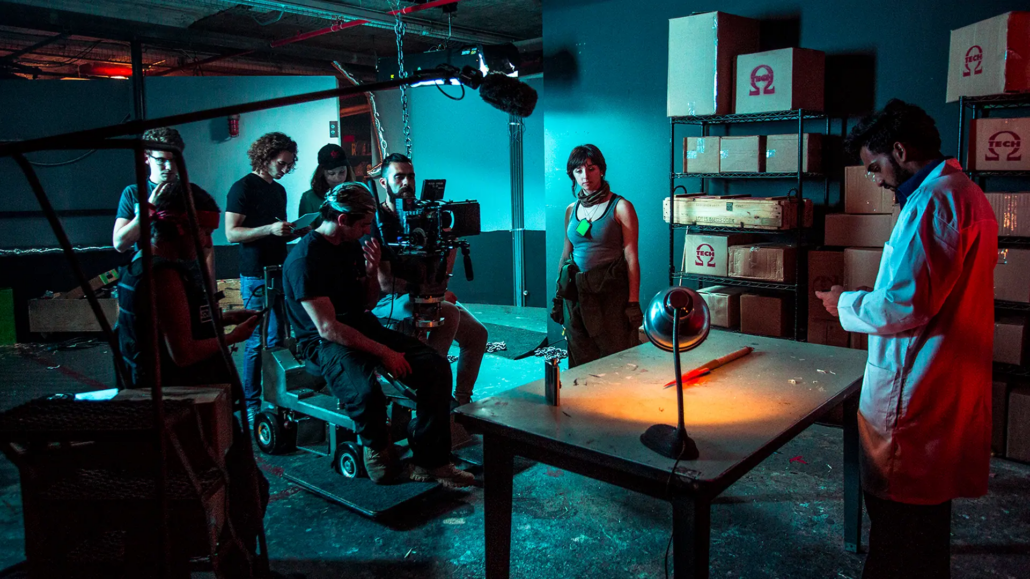
Every film is a visual argument. Before a single line of dialogue lands, the audience is already reading the frame – the lighting in a room, where the camera sits, how a character moves through space. Visual storytelling is what turns footage into meaning. It’s also the skill set that separates filmmakers who understand the medium from those still pointing a camera at things and hoping.
This guide covers the core tools – lighting, composition, camera movement, color, framing, and editing – and how to start using them on purpose.
What Is Visual Storytelling in Film?
How Images Communicate Before Dialogue Does
Visual storytelling is the practice of using images to convey emotion, character, and meaning without leaning on words to do the heavy lifting. The key insight: when image and dialogue conflict, the image wins. Almost every time.
Consider a scene where a character says “I’m fine.” Two versions:
Version A: Medium shot, warm lighting, the character centered and engaged. The words and image agree. You believe them.
Version B: Same line, but the character is a tiny figure lost in an extreme wide shot, swallowed by an empty room, framed by a closing door. Suddenly “I’m fine” reads as anything but.
Nothing about the performance or the script changed. The frame did. That’s film language – the visual grammar filmmakers use to construct meaning on screen.
A few more examples: a close-up that lingers a beat too long tells you something is wrong. A wide shot that dwarfs a character in their environment communicates isolation without a single line of exposition. A cut to an empty chair where someone used to sit does more than any eulogy could. None of that happens by accident.
Why Visual Storytelling Matters for Film Students
This isn’t just a cinematography skill. It sharpens every decision you make in production and post. Directors use it to block scenes. Editors use it to build rhythm. Producers use it to spot problems in the cut before they become expensive ones. The stronger your grasp of how images create meaning, the better your short films, class projects, and portfolio work will be.
Lighting Sets the Mood of a Scene
How Light Shapes Emotion
Lighting in film isn’t about visibility. It’s one of the most powerful tools for shaping mood and directing attention. Three things matter most:
Quality: High-key lighting (bright, even, minimal shadow) reads as neutral or optimistic. Low-key lighting (high contrast, deep shadow) creates tension, mystery, or dread.
Direction: Light coming from below a face reads as sinister. Light from above can feel oppressive or divine, depending on context.
Source: Practical lighting – visible sources like a lamp or a window – grounds a scene in the physical world while setting emotional tone.
The goal isn’t to follow rules. It’s to understand what each choice communicates.
Practical Lighting Choices Students Can Try
You don’t need a full lighting package to make meaningful choices. Shoot golden hour for warmth and softness. Use overcast conditions for flat, emotionally neutral light. Control natural window light with a simple reflector or a sheet of white foam core. Experiment with motivated light – sources that make sense within the scene – and watch how it changes the same shot. Intentionality is the point. Know why you’re using the light you’re using.
Composition Guides the Viewer’s Eye
Framing, Balance, and Visual Focus
Composition in film is the arrangement of visual elements within the frame. The rule of thirds is a starting point. The real work is understanding what each compositional choice communicates.
Symmetry signals control, order, or unease depending on context. Negative space suggests loneliness, possibility, or psychological pressure. Leading lines draw the eye toward a subject or toward the edge of the frame, building tension or release. A cluttered frame reads differently from a spare one. Restraint is a craft decision.
Composition is also about what you leave out. A carefully controlled frame, where nothing is there by accident, has a different quality than one that’s unconsidered.
How Blocking Supports Visual Meaning
Blocking is composition in motion. When a character moves toward the camera, the audience feels their intention or their threat. When two characters are placed on opposite sides of the frame, the composition itself communicates distance or conflict before anyone speaks. Directors who block with purpose are building visual meaning into the scene’s choreography, not just staging it for coverage.
Camera Movement Changes the Audience’s Relationship to the Story
When to Keep the Camera Still
A locked-off shot creates observation. The audience watches from outside, like a witness. Some of the most powerful moments in cinema are static: the camera holds still while everything in the frame shifts. The stillness becomes its own kind of tension. Don’t underestimate it.
When Movement Adds Energy or Meaning
Every type of camera movement does something different. A tracking shot that follows a character creates proximity and energy. A slow push-in builds anticipation or reveals emotional significance. Handheld movement suggests instability, urgency, or a fractured point of view. Crane shots and wide aerials place characters in context, making them small against a larger world.
The question is always: what does this movement do for the story? If the answer is nothing, the camera should stay still.
Color Creates Tone, Symbolism, and Continuity
How Color Palettes Shape Audience Response
Color works on audiences before they’re conscious of it. Warm tones (reds, oranges, ambers) read as energy, passion, danger, or intimacy depending on context. Cool tones (blues, greens) suggest distance, calm, melancholy, or threat. Desaturated palettes feel gritty, naturalistic, or emotionally exhausted. Highly saturated palettes feel heightened, dreamlike, or stylized.
Color also creates continuity. When a character’s wardrobe shifts from warm to cool across a film, it can track an internal transformation. When two scenes share a palette, it creates subconscious connection. These are intentional choices, not aesthetic accidents.
Using Color Without Overexplaining the Story
The risk with color symbolism is over-coding it – making choices so obvious they read as heavy-handed. The most effective uses of color are felt rather than decoded. A red door doesn’t need to be explained. It just needs to be present, consistently, in the right context. Trust the audience. Let the visual mood do the work.
Framing Reveals Character and Point of View
Shot Size and Emotional Distance
Shot size is one of the most direct tools for controlling emotional distance. An extreme close-up brings the audience into a character’s interiority – the flutter of an eye, the tension of a jaw. A medium shot is neutral and observational, the default register of everyday drama. A long shot places character in environment, emphasizing context over psychology.
Each shot size communicates a different relationship between the audience and the person on screen. Switching between them within a scene is a conscious choice about how close you want the audience to feel.
Perspective, Angle, and Power
Camera angle adds another layer. A low-angle shot makes a subject look larger, more powerful, more threatening. A high-angle shot diminishes them. Eye-level is neutral – the default that other angles deviate from. Dutch angles create unease or disorientation.
Who gets the powerful angles and who gets the diminishing ones tells you about the power dynamics of the scene before anyone opens their mouth.
Editing Builds Rhythm, Meaning, and Emotional Impact
How Cuts Shape Time and Attention
Editing is where the visual story gets its rhythm. Fast cuts create urgency, energy, compressed time. Slow cuts give space to breathe. A cut to a reaction shot changes the meaning of what was just said. A cut on movement creates fluid, invisible continuity. A jump cut creates rupture, disorientation, or stylized energy.
Editing isn’t assembly. It’s an argument about what matters and in what order.
The Emotional Power of What You Leave Out
Some of the most important editing decisions involve omission. A door closing before a confrontation. A cut away from violence that lands harder than showing it would have. The space between shots is charged with meaning. Using that absence deliberately is a mark of mature filmmaking.
Visual Storytelling Examples Film Students Can Study
Moonlight: Lighting, Color, and Intimacy
Barry Jenkins and cinematographer James Laxton built Moonlight around intimate close framing and a color palette that shifts across the film’s three chapters. Warm lighting in scenes of tenderness and cooler, harder light in scenes of threat create a visual shorthand for the main character’s inner life. Cinematography is doing psychological work in almost every frame.
In the Mood for Love: Framing and Restraint
Wong Kar-wai and Christopher Doyle’s In the Mood for Love is a masterclass in what framing can communicate through restriction. Characters are often partially obscured by foreground elements. The camera rarely shows both subjects in the same frame. That restrained composition mirrors the emotional restraint of the story. The visual style is the emotional argument.
Parasite: Composition and Class Tension
Bong Joon-ho uses composition in Parasite with almost architectural precision. The vertical geography — basements, ground level, elevated homes on hills — is a visual map of class. Camera angles and blocking reinforce who has power and who is looking up at it. The geometry of the frame tells the story.
Roma: Camera Movement and Memory
Alfonso Cuarón’s Roma uses slow, deliberate camera movement – often long lateral pans – to create a feeling of memory and observation rather than dramatic urgency. The camera moves at its own pace, independent of the action, making the audience feel like witnesses to a world rather than participants in a plot.
Crouching Tiger, Hidden Dragon: Movement and Emotion
Peter Pau’s cinematography uses camera movement and physical choreography together to express emotion. The weightlessness of the action sequences makes the restraint of the dramatic scenes feel even more charged. The contrast between stillness and movement is itself a directing technique.
How Students Can Practice Visual Storytelling
Build a Visual Plan Before Production
Visual storytelling starts in preproduction, not on set. A storyboard or shot list – even a rough one – forces you to make decisions about camera placement, shot size, and framing before you’re working against the clock. A look book, a collection of reference images and film frames that capture the visual mood you’re after, gives your whole team a shared vocabulary before day one of production.
Review Footage Like a Storyteller
Get in the habit of watching your own footage critically. Not “did it come out okay” – but “what is this image actually communicating?” Does the lighting support the scene’s emotional register? Is the composition guiding the eye where it needs to go? Is the shot size right for this moment? Reviewing footage as a storyteller, not just a technician, builds instincts that become automatic over time.
Connecting Cinematography, Directing, Production, and Editing
Visual storytelling isn’t the job of a single department. It’s the result of the director, cinematographer, production designer, and editor working from a shared understanding of what the film is trying to feel like. That alignment requires a common visual language – the ability to talk concretely about lighting, composition, color, and editing in ways that translate across roles.
Whether you’re directing, shooting, cutting, or producing, visual storytelling is the foundation the work is built on.
FAQs: Film Student’s Guide to Visual Storytelling
Q1: What is visual storytelling in film?
Visual storytelling in film is the use of images, lighting, composition, movement, color, framing, and editing to communicate emotion, character, and meaning — often before a word is spoken.
Q2: Why is visual storytelling important for film students?
Visual storytelling helps film students make stronger creative choices in preproduction, production, and postproduction. It improves short films, class projects, documentaries, music videos, and portfolio work regardless of role.
Q3: How does lighting affect visual storytelling?
Lighting affects mood, tone, and focus. Soft light can feel natural or intimate, while hard shadows and high contrast create tension, mystery, or emotional distance.
Q4: How does camera movement shape a scene?
Camera movement changes how close the audience feels to the action. A still frame creates focus and detachment, while a tracking shot, handheld shot, or push-in can add energy, urgency, or intimacy.
Q5: How does editing contribute to visual storytelling?
Editing controls pacing, rhythm, and audience attention. The timing of each cut — and what it cuts to — can change how viewers understand a character, a conflict, or an emotional moment.
Q6: Can students practice visual storytelling without expensive equipment?
Yes. Intentional choices matter more than expensive equipment. Students can practice with natural light, careful framing, purposeful blocking, simple color choices, and thoughtful editing.
Q7: What careers use visual storytelling skills?
Visual storytelling is central to cinematography, directing, film editing, production design, screenwriting, documentary filmmaking, music video production, and branded video content.
Interested in developing these skills in a working production environment? The Los Angeles Film School offers on-campus and online programs in Film Production, Directing, Cinematography, Producing and Digital Filmmaking. Request more information or apply now to get started.
