
Let There Be Sound: An Interview with A-List Sound Mixer Phillip Bladh
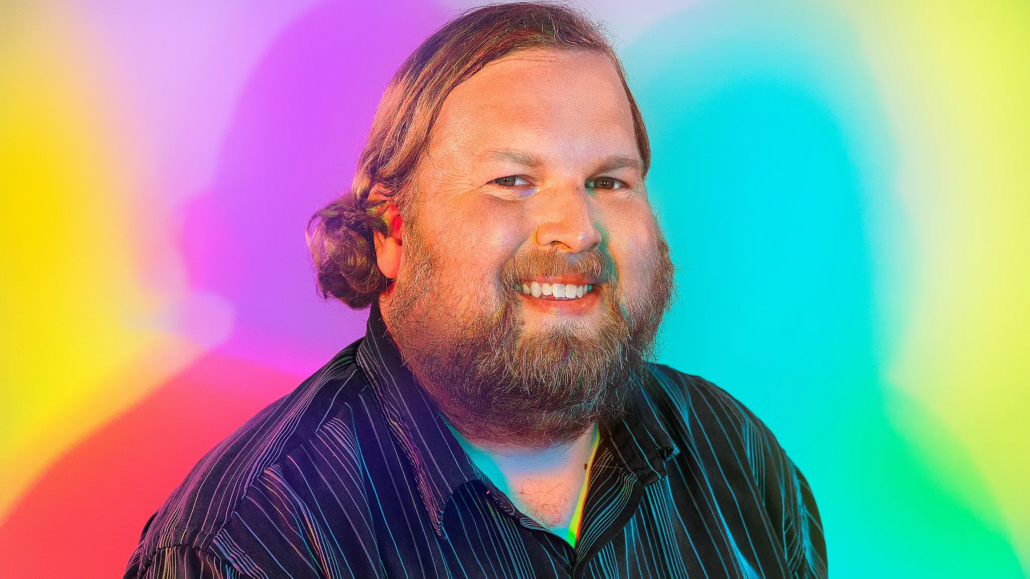
For Oscar-winning sound mixer Phillip Bladh, sound has never just been technical — it’s an emotional audio journey for audiences that can make or break a film.
Long before winning a Best Sound Academy Award for his groundbreaking work on Sound of Metal, the Los Angeles Film School alumnus was a musician obsessed with microphones, recording equipment, and the invisible ways sound shapes human experience.
Today, Bladh is recognized as one of the industry’s most pragmatic and talented production sound mixers, helping to shape new ways for audiences to experience sound and silence in cinema. Highly regarded and known for creating immersive sonic environments on films like the aforementioned Sound of Metal as well as Come On, Come On, The Harder They Fall, Kinds of Kindness, Opus, Eddington, and numerous other acclaimed independent productions.
His journey has also led him to work with the industry’s A-listers, including Al Pacino, Joaquin Phoenix, Emma Stone, John Malkovich, Willem Dafoe, Julianne Moore, Jesse Eisenberg, Eva Longoria, Casey Affleck, and many others.
He just wrapped post-production on the forthcoming Coyote vs. Acme, starring John Cena, along with other productions starring Anthony Mackie, Rob Lowe, and Scott Eastwood.
But Bladh’s journey didn’t begin with Oscars or prestigious film sets. It began with music, curiosity, Craigslist job searches, and an unwavering commitment to learning the craft one project at a time.
In this candid conversation, Bladh reflects on discovering The Los Angeles Recording School almost by accident, surviving the early hustle of Hollywood, and collaborating with prolific directors like Mike Mills, Zack Snyder, The Safdie Brothers, Yorgos Lanthimos, Ari Aster, Darius Marder, and Neil Burger.
He also shares advice for aspiring filmmakers and audio professionals on why filmmaking is ultimately about trust, adaptability, reliability, doing your best, and solving problems together.
Did you always know that you wanted to work in the film industry?
PB: Not at all. Music came first for me.
I grew up in Southern California and played in bands throughout high school.
I thought I was going to become a songwriter or musician. Even now, I still write music and play in a band in Albuquerque called Sandpaper Jacket.
Our band name has a funny story, it is actually a production sound joke. Sometimes actors wear jackets that literally sound like sandpaper rubbing against the microphone, so sound people immediately know exactly what that means.
Music was really the thing that opened the door for me creatively. I became fascinated with recording studios, microphones, analog gear, mixing boards — all of it. I loved how sound could completely change the emotional experience of something.
At the time, though, I was working at the YMCA. I was comfortable financially, but I realized I wasn’t moving toward the life I actually wanted. So I started exploring other options.
A JOURNEY BEGINS
How did you come across The Los Angeles Film and Recording Schools?
PB: I remember driving through Hollywood one night after a concert. We stopped at a red light right outside of The Los Angeles Recording School. We were talking about my future, and the person who was with me literally pointed at the recording school’s building and said, “You should go there.”
I took a tour almost immediately after that conversation and enrolled shortly afterward.
That night and that red light honestly changed the entire direction of my life.
Oh, wow, that sounds so serendipitous! What were your first days at The Los Angeles Recording School like?
PB: I remember feeling both excited and terrified.
On one of my first days there, Spider-Man 3 was premiering across the street at the Cinerama Dome. There were giant displays outside, people dressed like Venom climbing the building — the whole Hollywood spectacle.
Meanwhile, inside the school, one of the administrators gave a really inspirational speech, saying something like, “One of you could be the next person to win awards or make groundbreaking films someday.”
At the time, it felt impossible to imagine myself in that position. Now it’s surreal because somehow I became one of those alumni success stories myself.
Everything felt larger than life.
But, I certainly wasn’t sitting there thinking, “One day I’ll win an Oscar.“
Was production sound always your intended path?
PB: No. One of the great things about The Los Angeles Recording School is discovering jobs that most people don’t even know exist. Obviously, you don’t learn about every single on-set or in-studio role, but you learn about the different departments.
When you’re outside of the industry, dreaming about working on it, you know what directors do. You know what actors do.
But production sound?
Most people have never heard of it, or if they have, they still don’t fully know all that it entails.
As I learned more about filmmaking, I became fascinated by the role it plays in film.
Production sound sits in this interesting place where you’re part artist, part technician, and part problem-solver.
You’re constantly listening, not just to dialogue, you’re listening to emotion. You’re listening to spaces and what sounds would enhance them; you’re listening to how a scene feels.
At the same time, you’re figuring out how to capture all of that while fifty other things are happening around you. Sometimes also troubleshooting issues. You have to learn how to focus.
That combination really appealed to me.
What do you remember most about being a student?
PB: I think being slightly older than many of the students helped me.
Many students were in their early twenties or right out of high school, and I was around 28. I had already experienced what it felt like to be stuck in a career path that didn’t fulfill me.
That changes your mindset. So I approached school differently.
I wasn’t there casually. I knew this was my opportunity to completely reinvent my future.
When you’re older, you’re very aware of the fact that you’re taking a risk. You’re investing money. You’re changing careers. You’re starting over.
There’s a lot less room to casually drift through the experience, so I was invested in learning as much as I could.
Also, a big lesson that I learned while in school was the importance of consistency.
For example, if we’re filming two people talking at a table (which a simple scene like that can take six hours or more to shoot sometimes), you often start and stop the camera and sound, and during one of the takes there might be different background noise- a helicopter overhead, birds, you know, things you can’t control. That becomes challenging in the editing stage, where they are trying to piece two or more pieces of sound together that don’t have consistency.
So as the person responsible for what audiences will hear, you really need to protect the consistency of audio, just like the camera people and cinematographers protect continuity.
One of the first times that I felt like I did a great job with consistency was on The Invitation, for Director Karyn Kusama (Yellowjackets, Jennifer’s Body). I ended up working on a second of her films later, Destroyer, starring Nicole Kidman.
It’s great that you were so invested in really learning the foundational tools. Did you notice that you started watching films or listening to music in a different way based on everything that you were learning?
PB: Yes, definitely. The nice thing is we got a lot of hands-on time with different gear, and we learned about different audio, mixing, and recording set-ups. We played around with SSL consoles and so much more.
So because I was in recording school, I could watch the MTV Nirvana Unplugged and be like, “Oh, he’s just singing into a Beyerdynamic 88.” The mic that Kurt Cobain is singing into for that whole performance is a Beyerdynamic. So you end up with a sort of reflex knowledge like that.
I can look at a microphone now and be like, that’s an audio dynamic, you know.
The one thing about school, though, is that you have to want to learn. I was thirsty; I really wanted to feel prepared to build a long-term career in the industry.
That must be a big compliment when you get called back to work on more than one project with directors and talent.
PB: Yeah, the best thing that can happen to anyone in this industry is to be someone’s guy.
Their go-to person for your specific craft. You hear about people like George Lucas and Martin Scorsese and others who have worked with the same people their entire careers. I got to meet Steven Soderbergh at the Oscars the year I won, and he told me that he always uses the same guy. That’s the dream.
I’ve worked with Karyn Kusama twice, and Eva Longoria has hired me for two of her films Flamin’ Hot Cheetos and the forthcoming The Fifth Wheel.
I’ve also gotten to work with actors like Joaquin Phoenix and Emma Stone multiple times.
I’ve also worked on a few A24 films.
A LEAP OF FAITH
How difficult was it to break into the industry after graduation?
PB: It’s definitely challenging, and it’s that way for most people. There’s no sugarcoating that.
I did what most people do in the beginning: I hustled constantly. I interned. I became a production assistant. I worked on commercials and low-budget indie films– whatever I could get hired for.
I walked around Hollywood, dropping off resumes at post houses and production companies.
I walked from the recording school to the film school and stopped at every place, every post house, every production place, dropped off my resume and said, “I would like to intern here as part of the film school or recording school.”
Once I was out of school, I really hustled. I would go on Mandy.com and Staff Me Up every morning and then check Craigslist for jobs all day long, but really, you get most jobs from people you know or who you’ve worked with before. That is still the case for me today.
I remember going to the premiere of a film that I worked on last summer and then talking to some of my colleagues, asking them what they were up to next. They told me they were staffing up for a new production and asked me if I was free, and I ended up being a part of that production. That’s really how it works.
I’ve also gotten some jobs from past fellow alumni. I’ve worked with James Cotton (Class of 20021) at least a couple of times. One of my first indie films was called Madison County, and more recently, Lear Rex, starring Al Pacino. How is that for leveling up?
Did dropping off resumes at the various places actually work for you?
PB: I got an internship at one of the places; it was called Larson Studios, I think? I don’t know if it’s there anymore; it was right next to the old Cat and the Fiddle.
I interned while I was in school for about six weeks before I graduated.
And then, I talked to a guy named Mark Wheelage, who hired me as a boom operator on a short film that he did, which was basically just me holding the mic, probably in an awful way. I didn’t even have headphones because he didn’t have any kind of ComTech or anything. Through jobs like that, I kind of got the gist of how to do the job.
Next, I became a production assistant (P.A.) intern for Chelsea Pictures, which was on the Hollywood Center Studios lot. They focused mostly on commercials and music videos.
I was basically responsible for coffee and lunch and dealing with answering the phones when the secretary had to go to the restroom, you know, just very basic intern stuff. Then, when they had a shoot in LA, they would hire me as a P.A., where I made $250 a day.
Which was like big money back then.
At the same time, I kept telling people, “I want to work in sound.”
That’s something I always tell everyone: “People can’t help you if they don’t know what you want.”
Eventually, a producer I’d met while PA-ing called me and said, “Hey, I’m producing this indie feature. Do you want to do sound?”
And I immediately said yes.
Then afterward, I had this panic moment where I realized, “Oh no, I actually need professional gear now.”
Because production sound mixers don’t just bring themselves — they bring thousands and thousands of dollars’ worth of equipment.
So I took out a massive loan, bought the gear, and committed fully.
It was terrifying, honestly. But it also forced me to take myself seriously. It ended up being a good long-term decision.
You took a big leap of faith and followed your passion.
PB: Honestly, it was terrifying. I took out a substantial loan.
At the time, it felt completely insane. I remember thinking, “This is either a brilliant decision or a terrible decision.“
There wasn’t much middle ground. But sometimes committing to yourself is uncomfortable.
Buying the equipment forced me to stop thinking of this as something I wanted to do someday.
Now I had to make it work. And honestly, that pressure ended up being a gift.
Even my dad at the time, who had had a career as a lawyer, asked me, “Are you sure you don’t want to pursue something with more stability?”
Did you receive any guidance on what equipment you needed from anyone?
PB: Honestly, I crafted my kit, you know you have to have a kit in the same way a grip or any other production role has a kit, from what I learned in school, what I saw on sets, what I learned from talking to other mixers, and randomly a list that Kirk Francis the Academy-Award winning sound mixer for The Bourne Ultimatum, L.A. Confidential, and the Tree of Life had published online in an article.
I took his list down to Coffee Sound, which later became Location Sound, in Burbank, and got a quote. I obviously couldn’t purchase every item, but I knew I wanted to have high-quality gear and to be competitive for future roles, so I purchased what I could and added to it over the years.
But it was still a large investment, so I ended up asking my dad if he could co-sign a loan. He was a little hesitant at first, but he did help me with it.
So my Oscar is currently at my parents’ home as a thank you for their support and investment.
You’ve worked with remarkable filmmakers throughout your career. What have the best collaborations taught you?
PB: Trust matters more than almost anything.
The best directors create environments where departments collaborate instead of compete.
I had this type of experience with
Everybody wants to contribute. Everybody wants to help solve problems.
And the strongest filmmakers know how to harness that collective creativity.
One of the dangers in this industry is becoming too protective of your territory.
The best sets don’t operate that way. The best sets feel like a team sport.
TRICKS OF THE TRADE
You mentioned that filmmaking is really problem-solving. Can you expand on that?
PB: Sure. People romanticize filmmaking, and there are certainly magical moments.
But most filmmaking is solving one problem after another:
The location is noisy, the wardrobe is making microphone noise, the weather has changed, the schedule has changed, the actor wants to improvise, or the camera wants to move somewhere unexpected.
I could go on, but you get it. Every day presents new challenges.
We need t-shirts that say 90% problem-solving, 10% filmmaking.
The crews that succeed aren’t necessarily the ones with the biggest budgets.
They’re the ones who adapt. That’s something I learned very early. Flexibility is a superpower.
You’ve probably learned many tricks of the trade; is there one that you’d share with newbies?
PB: One of the first things I learned on set was the value of the pantomime. Especially in horror or thriller films.
If someone has to do multiple takes or scenes where they are screaming, sometimes it’s best to have them pantomime the scream (you know, scream silently, but still make it look like they’re screaming) to preserve their voice and then record them later doing just the scream. It can be a lifesaver for talent, and also to be able to record a great scream
So whenever I do a horror movie, and somebody’s, like, being chased through the woods by a guy with an axe (which was the case in my second movie) I’ll instruct them to pretend like they’re screaming, or do it with 10% of the intensity still on their face. Then, later, I’ll pull them over, and we can record a real scream.
The second unexpected pro-tip is that I always carry lozenges in my kit, as that can be a lifesaver if an actor’s voice is getting hoarse. That happened to me on set recently with Kristen Wiig, so I gave her a lozenge, and she was thankful and surprised, saying, “Wow, thanks. The sound guy’s never given me a lozenge before.”
To me, it’s like, we need your voice, right? So, if I can help, I will. Or quite often, the director and the assistant director (AD) lose their voices all the time.
Lastly, I have these little portable recorders that I can just timecode and throw on the actors and be like, okay, go shoot this thing, while I am capturing other larger sound elements. They can also come in handy if anything is going wrong with any of the sound gear. I’ve used those two or three times as temporary solutions.
These are just a few of the many random things you learn on set.
On set, it is typical that a Director wants to be able to hear what is being filmed. How many people do you provide a sound feed to?
PB: Typically, it’ll be the director and producers that I prioritize, or sometimes script supervisors. That is one thing about owning sound, is you do have to prioritize often. Because sometimes you’ll also get other random visitors on set who want to listen, either from a studio or from investors and other people, and you just always have to ensure that you’ve first got the director and other essential staff set up with sound.
Yeah, that must be challenging, especially if you’re dealing with video villages and having to make logistics work.
PB: Yeah, with the Netflix movie I just did, we had three video villages.
So for sound, it was the director, the script supervisor, the producers, and then we had just like clientele, people who would visit every day.
For that film, we were working with Kim Kardashian. So, she had her entourage of people who were also filming her reality show while we were shooting our actual film, and they had needs, you know.
We were handing out, like, 40 headsets a day on that shoot. That is a lot.
Your work on C’mon, C’mon has become especially admired among filmmakers. What made that production unique?
PB: That movie changed the way I thought about filmmaking.
Mike Mills directed it in an incredibly fluid, collaborative way. He told me during the interview process that he didn’t want any sound carts on set because he wanted the production to move freely.
Most sound mixers would probably panic at the sound of that. Instead, I said, “Okay, let’s figure it out.”
The film itself almost worked like a living documentary at times. Joaquin Phoenix was playing an audio journalist, and we actually built functioning recording systems into the performance so he could genuinely capture sound while acting.
There were moments where Joaquin and the young actor, Woody Norman, would go off on their own, recording real environments while I simultaneously captured the production sound remotely.
It became this beautiful mix of fiction and reality.
Honestly, C’mon, C’mon felt less like making a traditional movie and more like painting collaboratively, where we all contributed.
What was it like collaborating with Joaquin Phoenix?
PB: Joaquin is incredibly committed and incredibly curious.
One thing people may not realize is how collaborative actors like him can be with technical departments. Because he was playing an audio journalist in C’mon, C’mon, he genuinely wanted to understand the equipment and the process. He wanted the interactions with sound gear to feel truthful.
That level of curiosity changes everything because suddenly technical departments become part of the storytelling process instead of just providing logistical support.
The best actors and directors that I’ve worked with understand that filmmaking works best when everyone contributes creatively.
ACHIEVING THE VISION
What separates the best collaborators from the rest in filmmaking?
PB: The best collaborators understand momentum.
They understand that filmmaking works best when departments trust each other instead of fighting for control.
There’s a tendency in the industry sometimes for people to become territorial — “I’m camera,” “I’m sound,” “I’m this.” But the best sets don’t work like that.
The goal should always be: how do we help the director achieve the vision while still solving the technical problems and doing our best together?
That’s something I really admired about Mike Mills. He treated filmmaking like a shared creative process.
After everything you’ve accomplished, what still excites you about filmmaking?
PB: I still love the challenge of it and the possibility of discovery.
Every film creates its own world. Every director works differently. Every project asks different questions emotionally and technically. Every set is different. Every scene presents a new problem to solve creatively.
That never gets old for me.
And when everything works — when the sound, performances, visuals, and emotion all come together — there’s nothing else like it.
You feel like you’re helping create an experience that people will carry with them emotionally long after they leave the theater.
That’s the magic people fall in love with. And honestly, I still feel lucky every time I get to do it.
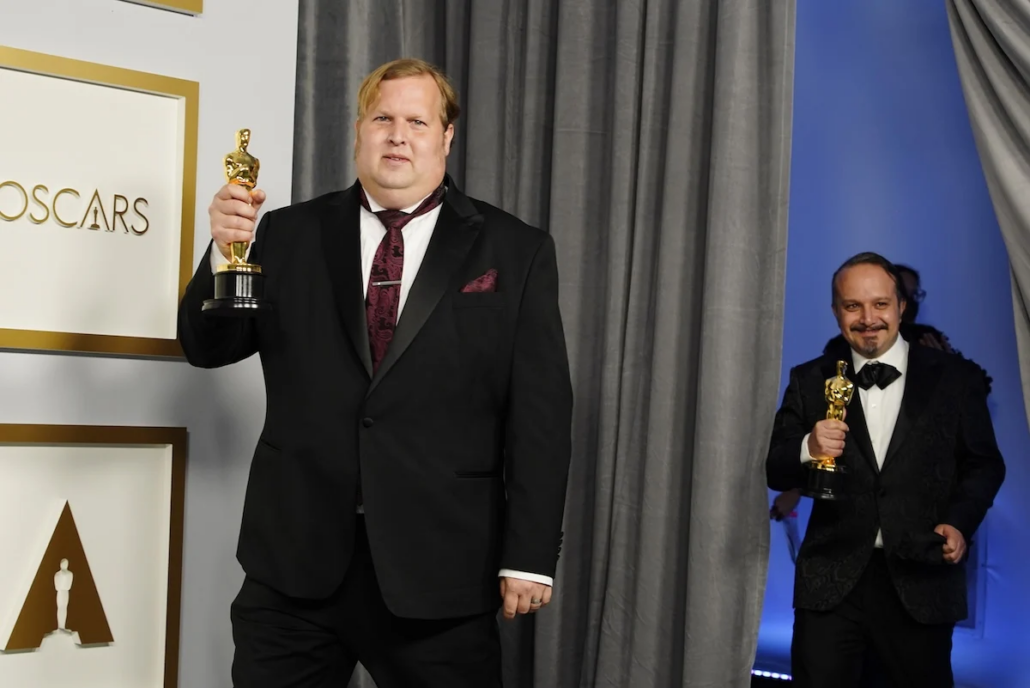
You’ve now won an Academy Award. Did that achievement change your life the way people imagine?
PB: Yes and no.
Winning an Oscar is obviously life-changing professionally. It opens doors and creates opportunities that didn’t exist before.
But I think people sometimes imagine that success suddenly removes uncertainty from your life or career, and that’s not really true.
You still have to interview for projects. You still have to maintain relationships. You still have to prove yourself creatively over and over again.
The hustle never fully disappears.
What changes most is probably my confidence. You stop questioning whether you belong in the room quite as much.
Go inside Phillip Bladh’s Oscar-winning experience here.
What advice would you give current Los Angeles Film School students?
PB: First, understand that this industry is a marathon, not a shortcut. You have to be in it for the long game.
A lot of students may think success happens overnight. It doesn’t. Even after winning an Oscar, you still have to hustle, network, interview, and prove yourself constantly.
Second: be someone people want to work with.
You can be talented, but if you create tension everywhere you go, people eventually stop calling.
Careers are built project by project, relationship by relationship.
Do a good job on every project, even the bad ones. Don’t burn bridges. Relationships matter more than people realize. Most jobs you will get as a filmmaker will come from people you know and people you’ve worked with. Relationships are key in this industry.
A huge part of sustaining a career is trust. Directors and producers want collaborators who stay calm under pressure and help solve problems.
And honestly? One of the most important things you can find in this industry is a mentor or a trusted friend.
Not someone you constantly ask for jobs — but someone you can learn from, ask questions, and grow with over time.
Find people you respect. Learn from them. Ask thoughtful questions. Observe how they navigate the industry. Not every connection needs to immediately become a job opportunity. Sometimes the most valuable relationships are the ones that slowly shape how you think creatively over time.
That’s how real lasting careers actually get built.
Interested in pursuing a career in sound production? Learn more about our Audio Production Program here.