
Latin America Is Running the Animation Pipeline
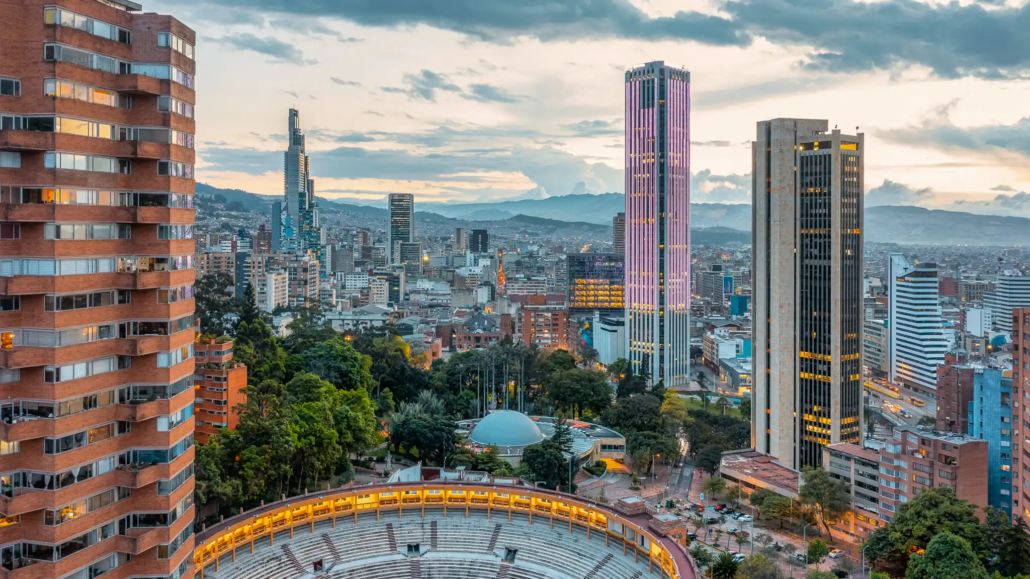
Sit through the credits on an animated series and actually read them. Somewhere between the executive producers and the sound mixers, the same cities keep turning up: Mexico City, Bogotá, Buenos Aires, Santiago, Rio de Janeiro. That pattern took two decades of deliberate industry-building. Latin American animation is now one of the most important regional forces in the global film industry, and anyone mapping out where an animation career could happen should understand how it got here.
The Credits You’re Not Reading Closely Enough
The modern animation pipeline doesn’t live in one zip code. A single animated series can be written in Los Angeles, designed in one country, and animated in another before it ever reaches a streaming service. Latin American studios have earned a regular place in that rotation, and the work they take on has grown well past overflow.
The region is doing three things at once:
- Absorbing production capacity for international studios, networks, and streamers
- Building original IP that travels far past its home market
- Training a talent pipeline deep enough to support both
Capacity plus creative ambition explains the credits. It also explains why the region deserves more than a footnote in any conversation about where the animation industry is headed.
The Quiet Shift in Where Animation Gets Made
From Outsourcing Destination to Creative Powerhouse
For years, the arrangement was simple. Latin American studios handled the labor-intensive middle of production (in-betweening, compositing, rendering) while creative decisions stayed in the U.S., Canada, or Europe. That animation outsourcing work was real, and it built real infrastructure.
Brazil set an early template. Public money from its national film agency, Ancine, and the Audiovisual Sector Fund (FSA) helped grow one of the largest animation sectors in the region, on a simple logic: build capacity first, then use it to launch your own stories. Mexico, Colombia, Chile, and Argentina have followed versions of that arc at different speeds.
Why the Region Is Suddenly Everywhere in the Credits
Three forces converged:
- Streaming went global, and platforms needed streaming content produced faster and closer to Latin American audiences
- Tax incentives and public funds made the math work for international productions
- A generation of artists trained at home instead of leaving immediately for hubs abroad
The result is a region that now shapes what gets made, in addition to executing other people’s plans.
Service Work: The Backbone of the Global Pipeline
What “Service Work” Actually Means
Animation service work means a studio provides production services (animation, modeling, rigging, compositing, post-production) on a project someone else owns, usually a larger international studio, network, or streamer. It’s how most working animators build a career, and how most studios anywhere build the muscle to do more.
Think of a production company that shoots commercials while it develops its first feature. The service contract pays for the lights, the software licenses, and the payroll that make ambitious animation production possible later.
The Studios Handling Work for Major Productions
Across the region, studios have built reputations on this work:
- Hook Up Animation Studios (Buenos Aires) has produced animation since 2001 for clients including Cartoon Network, Disney, Nickelodeon, and Warner Bros., while developing original projects of its own
- Labo (Mexico City) has offered post-production since 2006, with editorial, VFX, sound, localization, and film lab work under one roof
- Punkrobot (Santiago) moves between original films and partner projects, including an episode of Lucasfilm’s Star Wars: Visions Volume 2
Streamers are building out locally, too. Netflix opened its first Argentine office in 2021 and moved into a larger Buenos Aires office in April 2026. On the Netflix animation side, its Argentine slate includes an animated Mafalda series directed by Oscar winner Juan José Campanella.
From Service Work to Original IP
Studios Building and Owning Their Own Stories
The bigger story is what studios do with the leverage service work buys them: develop and sell their own characters and worlds.
Rio de Janeiro’s Copa Studio is the clearest example. Jorel’s Brother (Irmão do Jorel), created by Juliano Enrico and co-produced with Cartoon Network and TV Quase, has run for more than a decade and won Best Series at the Quirino Awards, the leading prize for Ibero-American animation, in both 2019 and 2025. Co-production means shared intellectual property ownership, and that’s the point: a Brazilian studio at the table as a creative partner instead of a vendor.
Mexico’s Ánima Estudios ran the same play before its 2026 troubles (more on that below). Its Leyendas film franchise became the basis for Legend Quest (Las Leyendas), which Netflix launched in 2017 as its first original animated series produced in Latin America.
Festival Recognition and Streaming Originals
Chile shows how far a point of view can travel. Punkrobot’s Bear Story (Historia de un oso) won the 2016 Oscar for Best Animated Short, Chile’s first Academy Award and Latin America’s first Oscar for animation. Hugo Covarrubias’s stop-motion short Bestia, about a secret police agent during Chile’s dictatorship, earned an Oscar nomination in 2022. Cristóbal León and Joaquín Cociña’s The Wolf House toured festivals worldwide and won Best Visual Development at the 2019 Quirinos. None of the three was made to fill a service contract.
Colombia just received the biggest signal yet. As Annecy 2026 wrapped, the festival named Colombia its Country of Honor for 2027, joining past honorees that include Mexico and Brazil. Annecy and its MIFA market draw more than 18,000 accredited professionals from nearly 120 countries each year. Bogotá prepared for the moment through its Gente Convergente program, which sent local studios to Pixelatl and Gamescom and funded Bogotá, One City, Many Worlds, an animated anthology from local studios set to premiere at Annecy 2027.
The move from renting out hands to owning ideas is the biggest story in Latin American animation right now, and it’s happening one studio at a time.
A Country-by-Country Look
Mexico and Colombia’s Growing Studio Ecosystems
Mexico built the region’s reputation for scale, and 2026 showed how fragile scale can be. In July, Ánima Estudios paused production and announced a corporate restructuring, confirming layoffs while declining to comment on former employees’ claims of unpaid wages. Growth and stability are different things. Mexico also remains a major hub for Spanish-language dubbing and localization, work that overlaps directly with audio production and rarely gets its due.
Colombia’s growth has been more deliberate. Bogotá studios including Dinamita Animación, Hierro Animación, Lucy Animation Studio, and Piragna have spent recent years building international relationships, with city-backed mentorship from the Paris animation school Gobelins and regular trips to markets like Pixelatl in Guadalajara. Several of them are behind the Bogotá anthology headed to Annecy.
Chile and Argentina’s Oscar-Level Pedigree
Chile punches well above its size. A small, tight community of 2D, 3D, and stop-motion artists has produced an Oscar winner and an Oscar nominee without the volume of Brazil or Mexico, helped by public funders like the economic development agency CORFO. Craft and point of view travel as far as production capacity does.
Argentina’s studios cluster around Buenos Aires and have run one of the most established service pipelines among Southern Cone studios for decades, backed by the national film institute, INCAA. That backing is shrinking. The Argentine fact-checking outlet Chequeado reports that INCAA’s production support fell 81.8% in 2025 compared with 2023, under President Javier Milei, and a 2026 labor reform sets the end of the institute’s dedicated funding streams for 2028. Argentine studios have long competed on experience and exchange rates. Now they compete with less public money behind them.
The Role of Government and Incentives
Tax Incentives, Funding, and Co-Production Treaties
None of this happened by accident. Every country in this conversation uses policy to compete for production:
- Mexico, which already runs the EFICINE film tax incentive, added a separate income tax credit of up to 30% in 2026, open to domestic and international projects. Animation, VFX, and post-production processes can qualify on their own with a minimum spend of 5 million pesos
- Brazil’s Ancine supports international co-production from treaty negotiation through financing, and its review of 2015 to 2024 ranked Argentina as Brazil’s top co-production partner
- Colombia backs its push through Proimágenes Colombia, the national Film Development Fund (FDC), and the CINA incentive
- Chile has used public funds, CORFO among them, to support smaller, craft-driven studios
- Argentina’s INCAA funded local production for decades and now operates with far less
How Policy Shaped a Creative Industry
Government funding and tax incentives did more than subsidize production. They changed what could be built locally. Co-production treaties let a Brazilian and an Argentine studio legally share financing, distribution, and ownership on one project, instead of one side simply contracting the other. That legal infrastructure sits underneath everything else in this article. Without it, service work stays service work, with no path to original IP.
The Labor Economics, Honestly
Why the Work Comes Here: Cost and Talent
Cost is a real part of the outsourcing economics. Latin American studios can often deliver production capacity below U.S. or Western European rates, and currency swings widen the gap. Argentina’s animation export consortium, Animar, has openly pitched its exchange rate as a competitive advantage. Plenty of low-cost markets never build a reputation for quality, though. Latin America did, because the talent kept clients coming back.
The Real Questions About Wages and Sustainability
This is where the story gets complicated:
- Ánima’s 2026 restructuring came with layoffs and unpaid-wage claims from former staff, a reminder that flagship status doesn’t guarantee stability
- Hiring tends to boom and bust with whatever slate a streamer or network just greenlit, which leaves artists managing real income instability
- Animation wages across much of the region still trail North American and Western European rates for comparable work
- Public funding can shrink fast, as Argentina’s INCAA cuts show
None of that cancels the opportunity. Anyone building a career in this industry should read the labor economics as closely as the highlight reel.
The Talent Behind the Boom
A Growing Pipeline of Skilled Artists
Every stage of this story, from service contracts to Oscar nominations, runs on trained artists. The region’s animation talent pipeline has deepened fast, producing animators, riggers, compositors, and a growing number of directors and showrunners who can carry a project from concept to delivery. Training has scaled with it: by 2020, Santiago alone had seven animation schools, according to Chile’s national brand agency.
Training, Education, and Retaining Local Talent
Retention is the harder problem. A strong animation program can train an artist to a competitive level. Whether that artist builds a career at home depends on local studios, local incentives, and local IP. That’s why the shift toward original IP matters so much: owning stories is what turns a service economy into a creative industry people want to stay in.
What This Means for the Future of Animation
A More Global, Distributed Industry
The old map put creative decisions in a handful of North American and European cities and execution everywhere else. That map is breaking down. Global animation is becoming genuinely distributed, with creative authorship landing wherever a studio has earned the trust.
The Opportunities and the Open Questions
The opportunity comes with questions nobody has settled. How do studios protect artists as production capacity follows the lowest costs? How should intellectual property ownership be split when financing, talent, and IP come from three countries at once? What happens to a national industry when its public funding shrinks? Argentina is answering that last one in real time.
What Animation Students Should Take From This
Thinking Globally About Where Careers Happen
For anyone studying animation, VFX, or anything adjacent, the takeaway is this: don’t assume an animation career has to start or stay in one country. Interesting animation jobs over the next decade are as likely to be posted in Bogotá, Santiago, or Buenos Aires as in Los Angeles or Vancouver, at studios developing the next Jorel’s Brother or the next Annecy standout.
Career Paths in a Borderless Animation Industry
This is a whole-industry story:
- Animation and VFX artists: animation studios across the region staff both service pipelines and original projects
- Writing for Film & TV: as studios develop their own series, they need writers who can build a world and the series bible that sells it, as Legend Quest and the Bogotá anthology show
- Graphic Design: character and world design separate a forgettable series from a festival standout
- Entertainment Business: co-production treaties, tax incentives, and deal structures sit behind every project in this article
- Audio Production: dubbing, localization, and sound work make Mexico a hub in its own right
Wherever you land on that list, the throughline holds: production is borderless now, and a regional view of the industry is a narrow one.
How LA Film School Prepares Students for a Global Industry
Building Skills That Travel Across Borders
The fundamentals travel. Character animation, environment design, visual effects, and storytelling rest on the same principles in Bogotá as in Burbank. On campus, LA Film School students earn a Bachelor of Science in Animation with a concentration in Visual Effects or Game Art. The online Bachelor of Science in Animation offers concentrations in Character Animation, Environment & Character Design, and Visual Effects.
If a global animation industry is where you want to build, explore our on-campus Animation & VFX program or our online Animation program, request more information, or start your application.
FAQs: Latin America Is Running the Animation Pipeline
Is Latin America a major player in the animation industry?
Yes. Studios in Mexico, Colombia, Chile, Argentina, and Brazil handle substantial service work for international studios, networks, and streamers while developing their own original intellectual property. The region won its first animation Oscar with Chile’s Bear Story in 2016, and Annecy, the world’s largest animation festival, named Colombia its 2027 Country of Honor.
What is animation service work?
Animation service work means a studio provides production services, such as animation, modeling, rigging, or compositing, for a project owned by another company, often a larger international studio or streamer. It’s a common way for studios to build capacity, revenue, and expertise. Many Latin American studios started with service work and used it to fund their own original projects.
Which Latin American countries are leaders in animation?
Brazil is one of the region’s largest animation producers, supported by public funding through its national film agency, Ancine. Mexico, Colombia, Chile, and Argentina are also major players, contributing both service work and original productions. Chile in particular has earned award-level recognition, including Latin America’s first Oscar for animation.
Why do animation studios do work in Latin America?
Studios are drawn to Latin America for skilled talent, competitive costs, and government policies like tax incentives and co-production treaties. Those factors make the region an attractive place to produce animation. The labor economics deserve an honest look too, including wage gaps, boom-and-bust hiring, and long-term sustainability for local artists.
How do government incentives support animation in Latin America?
Latin American governments use tax incentives, public funds, and co-production treaties to grow their animation industries. Mexico, for example, introduced an income tax credit of up to 30% for film and audiovisual production in 2026, and Brazil’s Ancine supports international co-productions from treaty negotiation through financing. These policies encourage international collaboration and help local studios compete globally.
What is original IP and why does it matter for these studios?
Original IP refers to characters, stories, and worlds that a studio creates and owns, rather than producing work for someone else. Owning IP lets studios capture more long-term value, build their reputations, and gain creative control. For Latin American studios, moving from service work toward original IP is a step toward greater creative and economic independence.
What does the rise of Latin American animation mean for students?
It shows that the animation industry is increasingly global and distributed, with meaningful work happening far beyond traditional hubs. For students, that means opportunities may exist across many countries and studios. Understanding the industry’s international structure, and building skills that translate across borders, can open up a wider range of career paths.
