
Subgenres of Animation Explained
Ask ten people what animation looks like and you’ll get ten answers: a desk lamp that hops, a Ghibli sky, a clay dog with a nervous owner, a logo that assembles itself before an ad. They’re all right. Animation is a medium, and the subgenres of animation are the techniques inside it. Each has its own look, budget, and workflow. Here’s what each one is, what it costs, and who does it best.
Animation Is Not One Thing
Every animation technique solves the same problem: making still images read as motion. What changes is the material. Some styles use drawings, some use puppets, and some use math. Traditional animation, stop-motion, and 3D animation can tell the same story and still produce three different films, three different crews, and three very different invoices.
Why Understanding Subgenres Matters
How Style Shapes Story, Budget, and Career Path
Style shapes story. The handmade wobble of stop-motion makes a world feel touchable, and the precision of computer generated imagery makes it feel limitless. Style also shapes budget and schedule, which often decides whether a project gets made at all. And each style draws on a different mix of skills, which shapes the kind of work an artist gravitates toward.
Choosing the Right Technique for the Job
Knowing the types of animation lets an animator pick the right tool for the job instead of forcing every idea through the one they already know. A studio pitching a series asks which technique a team can sustain for 22 episodes. A director asks which one serves the tone. Both questions start with knowing the options.
Traditional (Cel) Animation
What It Is and How It Works
Traditional animation, also called cel animation or hand-drawn animation, is frame by frame animation in its purest form. Artists draw each pose. Historically, those drawings were inked onto transparent celluloid sheets, painted, and photographed over painted backgrounds. The cels are digital now, but the process of drawing every movement hasn’t changed.
The Cost, the Craft, and Who Does It Best
A feature can require hundreds of thousands of drawings, which makes this one of the costlier animation styles per minute. Disney’s Snow White and the Seven Dwarfs (1937) set the template. Studio Ghibli remains the benchmark, and Klaus (2019) showed the audience is still there.
Limited Animation
Doing More With Fewer Drawings
Limited animation does more with fewer drawings. It relies on held poses, reused cycles, and moving only the parts that need to move. UPA developed it in the 1950s as a deliberate modernist style, treating economy of motion as a design choice.
Where You’ve Seen It and Why It Endures
Hanna-Barbera turned it into television economics, animating only Yogi Bear’s head during dialogue because his collar and tie gave the body a clean place to stop. Critics called it cheap. The shows ran for decades anyway. The technique endures across TV animation and anime because strong writing and design carry more weight than drawing counts.
Rotoscope Animation
Tracing Reality Into Something New
Rotoscope animation traces over live-action footage frame by frame, so animated characters inherit real human movement. Max Fleischer invented the rotoscope, and his brother Dave’s on-camera performance in a clown suit became Koko the Clown.
The Look, the Labor, and Notable Examples
The look is fluid and slightly uncanny. The labor is enormous because every frame still gets drawn, so the technique appears in auteur projects more often than in weekly series. Ralph Bakshi used it at feature scale in The Lord of the Rings (1978), and Richard Linklater’s A Scanner Darkly turned it into something dreamlike.
Stop-Motion Animation
Bringing Physical Objects to Life
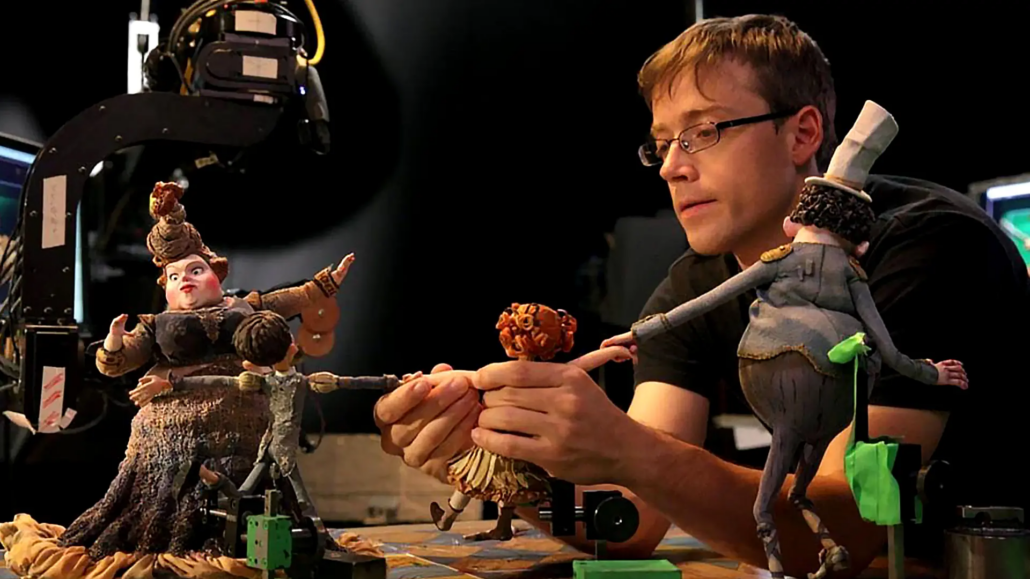
Stop-motion animation photographs physical objects one frame at a time, nudging them slightly between exposures. The category covers puppet animation with armatured figures, claymation with sculpted clay, and object animation with whatever is on the desk.
The Time, the Cost, and the Studios That Master It
It’s the slowest craft in the medium. At LAIKA, the studio behind Coraline and Kubo and the Two Strings, animators typically capture around three seconds of footage per puppet per week. Sets, puppets, and replacement parts all have to be built by hand, which puts stop-motion among the most expensive styles. Aardman built Wallace & Gromit from clay, and Guillermo del Toro’s Pinocchio (2022) won the Oscar for Best Animated Feature.
Cutout Animation
Moving Flat Pieces, Then and Now
Cutout animation moves flat, jointed pieces instead of redrawing a character every frame. Lotte Reiniger’s The Adventures of Prince Achmed (1926), built from hand-cut silhouettes, is the oldest surviving animated feature. South Park began as literal construction paper.
From Paper to Digital Puppets
Today, cutout animation lives mostly in digital puppets, which are characters rigged in 2D software with swappable mouths, hands, and heads. The approach is fast, consistent, and affordable, which is why so much TV and web animation runs on it.
Motion Graphics
Animation for Information and Design
Motion graphics animate type, shapes, and design elements to communicate rather than perform. The format covers title sequences, broadcast packages, product demos, and explainer video animation. Saul Bass set the standard in the 1950s, and the BFI credits him with giving birth to the pre-film title sequence as we know it.
Where It Lives in the Industry
Today, motion graphics appear in advertising, sports broadcasts, and every keynote that needed a chart to move. Few animation skills travel further outside entertainment, since nearly every brand, broadcaster, and tech company needs motion work.
Anime and Its Sub-Styles
What Defines the Anime Look
Anime’s look grew partly out of constraint. Osamu Tezuka’s Astro Boy (1963) used limited animation to keep up with a weekly TV schedule, and the industry built an aesthetic from those limits: held dramatic frames, bold camera moves, and detailed backgrounds.
The Range of Styles Within the Category
Anime art styles vary widely within the category: Studio Ghibli leans naturalistic; Satoshi Kon is precise and unsettling; Studio Trigger is loud and kinetic; Shonen and shojo are often mistaken for styles, but they are audience categories.
Hybrid 2D/3D Animation
Blending Techniques for a Distinct Look
Hybrid animation blends 2D and 3D techniques to get a look neither can achieve alone. Spider-Man: Into the Spider-Verse (2018) is the reference point. Its producers told the Motion Picture Association that working out how to weave CG, 2D hand-drawn animation, and comic book textures together took years.
Why More Studios Are Mixing Dimensions
Arcane and The Mitchells vs. the Machines followed with their own stylized animation. After a decade of similar-looking CGI, a distinct look became an advantage, and hybrid pipelines are how studios get one.
3D / CGI Animation
The Dominant Style and Its Demands
3D animation builds characters and environments as digital models, rigs them with virtual skeletons, and moves them through keyframe animation. The animator sets key poses, and software calculates the frames in between, a process known as tween animation. Toy Story (1995) was the first fully computer-animated feature, and CGI has dominated American animated films since.
The Cost, the Tools, and the Leaders
The work splits into modeling, rigging, texturing, lighting, simulation, and rendering. Pixar, Disney Animation, and DreamWorks lead the category. High-end CGI ranks among the most expensive styles because of team size and computing power.
How to Choose the Right Animation Style
Matching Technique to Story and Budget
Start with the story, then check the budget. A 60-second explainer rarely needs stop-motion. A memory sequence might suit rotoscope. A long-running series needs a style a team can sustain every week, which is why limited and cutout techniques dominate TV.
What Each Style Asks of the Artist
Each style asks something different of the artist, whether that’s draftsmanship, physical patience, design sense, or technical fluency. Beginners can try all of them with free tools and beginner exercises before committing to one.
Why Learning Multiple Styles Makes You a Stronger Animator
Versatility in a Competitive Industry
The 12 principles of animation apply to every subgenre on this list. An animator who understands how a hand-drawn character carries weight makes better 3D character animation. A motion designer who knows cel timing makes smoother graphics.
Career Paths Across Animation Subgenres
Versatility also widens the range of roles an artist can pursue across film, TV, games, and advertising, from character animator to compositor to motion designer to environment artist.
How LA Film School Prepares Students Across Animation Styles
Building a Foundation in Technique and Craft
The Los Angeles Film School’s animation program starts where every subgenre starts: the 12 principles. On campus, students earn a Bachelor of Science in Animation with a concentration in Visual Effects or Game Art, using industry-standard software to build a professional animation reel. The online Bachelor of Science in Animation offers concentrations in Character Animation, Environment & Character Design, and Visual Effects, each built on a real-world animation workflow.
Ready to Start?
Animation has room for clay, pencils, paper silhouettes, and render farms.
Explore our on-campus Animation program or our online Animation degree, request more information, or start your application.
FAQs: Subgenres of Animation Explained
What are the main types of animation?
The main types of animation are traditional (cel), limited, rotoscope, stop-motion, cutout, motion graphics, anime, hybrid 2D/3D, and 3D/CGI. Each has its own techniques, costs, and creative strengths.
What is limited animation?
Limited animation uses fewer drawings, held poses, and reused elements to create movement efficiently. It started as a stylistic choice, became a television budget strategy, and still shapes TV animation and anime.
What is rotoscope animation?
Rotoscope animation is a technique in which artists trace over live-action footage frame by frame. The result pairs realistic motion with an animated look, but the labor makes it slow and costly.
What is stop-motion animation?
Stop-motion photographs physical objects, such as puppets, clay figures, or models, one frame at a time, with small adjustments between shots. It’s among the most labor-intensive styles and produces a distinctly tactile result.
What’s the difference between 2D and 3D animation?
2D animation creates movement in a flat space, whether drawn by hand or digitally. 3D animation, or CGI, builds characters and environments as models that are manipulated in virtual space. Hybrid productions combine both.
What are motion graphics?
Motion graphics animate text, shapes, and design elements for titles, explainer videos, advertising, and branding. The focus is on communicating information rather than telling character-driven stories.
Which animation style is the most expensive to produce?
Costs depend on scope, but stop-motion and high-end 3D/CGI are typically the most expensive because of their labor, time, and computing demands. Limited and cutout animation tend to cost less.
