
TIFF: The Market Explained: What It Is, How It Works, and Where LAFS Alumni Already Fit In
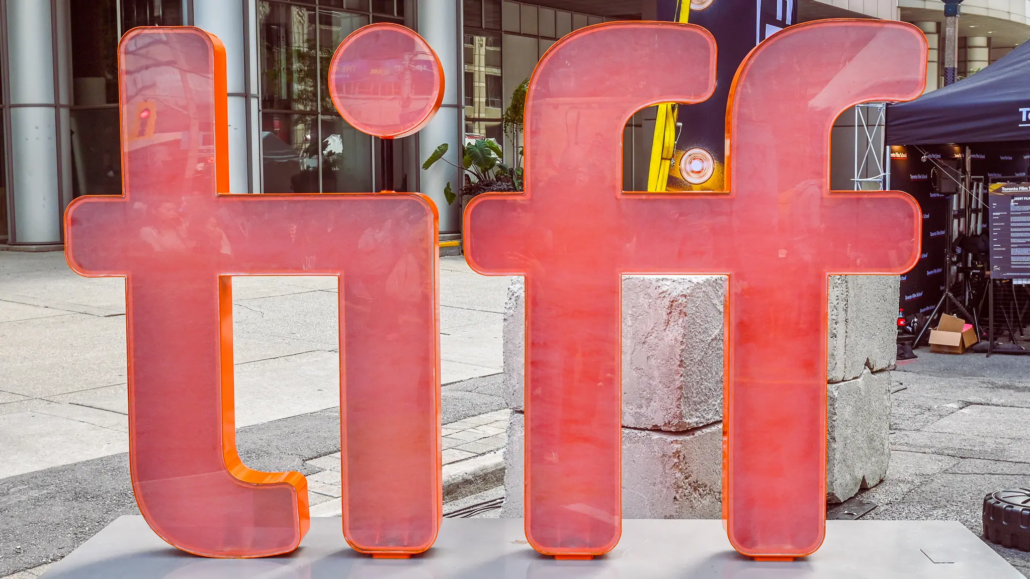
Every September, the Toronto International Film Festival fills the city with red carpets and premieres. Starting in 2026, TIFF added something the festival has never had before: an official market. Running September 10 to 16 alongside the festival, TIFF: The Market gave North America its own version of what the Cannes Marché du Film has done since 1959, a dedicated space where films, series, and other screen projects get bought, sold, and financed, separate from the public-facing side of the festival. This year, LAFS had a real stake in that room. Seven alumni worked across eight projects connected to the festival and market, including one who directed a feature.
What Is TIFF: The Market?
TIFF: The Market is the festival’s first official industry marketplace. Unlike TIFF itself, built around premieres and public screenings, the Market exists purely for business: buyers, sellers, financiers, and producers negotiating distribution rights and packaging new projects. It’s backed by a three-year, $23 million CAD investment from the Government of Canada and supported by Telefilm Canada, the largest public investment TIFF has received since it built its Lightbox headquarters.
Headquartered at the Metro Toronto Convention Centre, with sales suites at the InterContinental Toronto Centre and The Ritz-Carlton, the inaugural Market offered 650 market screening slots, 120 exhibitor spaces, and an Innovation Hub for XR, AI, and immersive projects. TIFF invited more than 250 new international buyers on top of the 800 who already attend annually, and agencies including CAA, UTA, and WME confirmed packaged projects for the launch. More than 150 sales agencies and over 130 buyers from 49 countries ultimately took part.
Why Now?
North America has never had an official market attached to a major festival. Sundance, New York, and Telluride don’t run one. Cannes and Berlin do, and the eight-month gap between the two left a real opening. TIFF CEO Cameron Bailey has framed the Market as a natural extension of the festival’s existing pull, giving buyers and sellers a business reason to be in Toronto rather than treating it as just a premiere stop. CAA’s Roeg Sutherland made the case directly: a fall market lets buyers close deals on projects headed into early production, easing the pressure that builds between Cannes and Berlin.
TIFF: The Market organizers have already pointed to a preview of what’s possible. Last year, Focus Features closed a $14 million deal with Capstone Global at TIFF for worldwide rights to Curry Barker’s horror feature Obsession, which has since crossed $342 million worldwide. TIFF’s own targets are ambitious to match: 12,000 registered delegates by 2030, up from roughly 5,000 today.
Can Film Students Get In?
TIFF has long welcomed student delegates, and the Market builds on that access rather than closing it off. Industry accreditation opens the door to market screenings, the speakers summit, and the Innovation Hub, alongside the standard festival badge options. For students, it works the way the Marché du Film does at Cannes: a lower-cost way to watch how deals actually get made, years before graduating into the industry.
LAFS Alumni at TIFF 2026
Seven LAFS alumni worked across eight projects connected to TIFF 2026, spanning both sides of the festival, the public-facing programme and the Market itself.
One standout is Andrew Haigh (Film, 2004). His fourth feature, A Long Winter, starring Fred Hechinger, Kit Connor, and Caitríona Balfe, premiered in TIFF’s Special Presentations after first bowing at Telluride. Haigh studied at LAFS in the early 2000s before going on to direct 45 Years, Lean on Pete, and the BAFTA-nominated All of Us Strangers.
On the Market side, Yoshio Kohashi (Film, 2004) edited Foster, an action-thriller starring James Franco, Ron Perlman, and Natalie Burn, which had a market screening for buyers at TIFF Lightbox during the festival, a direct example of the kind of packaged, in-progress project TIFF: The Market exists to move.
The rest of the roster worked below the line across TIFF’s biggest public titles: Spotlight Academy member Mehrnaz Mohabati (Audio Production, 2014) on Atonement and Club Kid; Kat Hess (Film, 2008) on Club Kid, Josephine, and The Only Living Pickpocket in New York; Brad Salo (Film, 2011) and Alyssa Ulrich (Entertainment Business, 2019) on Babies; and Alexander Jongbloed (Music Production, 2017) on River. It’s the kind of credit that belongs alongside the alumni work we’ve already covered on the blog, real names attached to real, verifiable projects.
The Takeaway
TIFF: The Market is still finding its footing. But its first edition already confirms what Cannes has shown for decades: the deal-making side of a festival is where careers actually take shape, often well before a film ever premieres. For the LAFS alumni already working on projects that moved through it, that’s not a hypothetical. It’s this year.
The Deal Comes Before the Premiere
By the time a film reaches a red carpet, most of the decisions that actually matter, who financed it, who owns which territory, who’s distributing it and where, were made months or years earlier, often in a room like the one TIFF: The Market just opened. That’s the side of the industry the credits don’t show.
The alumni in this piece prove how wide that industry actually is: directors, editors, sound mixers, and production coordinators, all trained at LAFS, all working different corners of the same business.
Explore our programs to find where you fit in.
Request more information or start your application today.
