
The Women Who Built Electronic Music Before It Had a Name
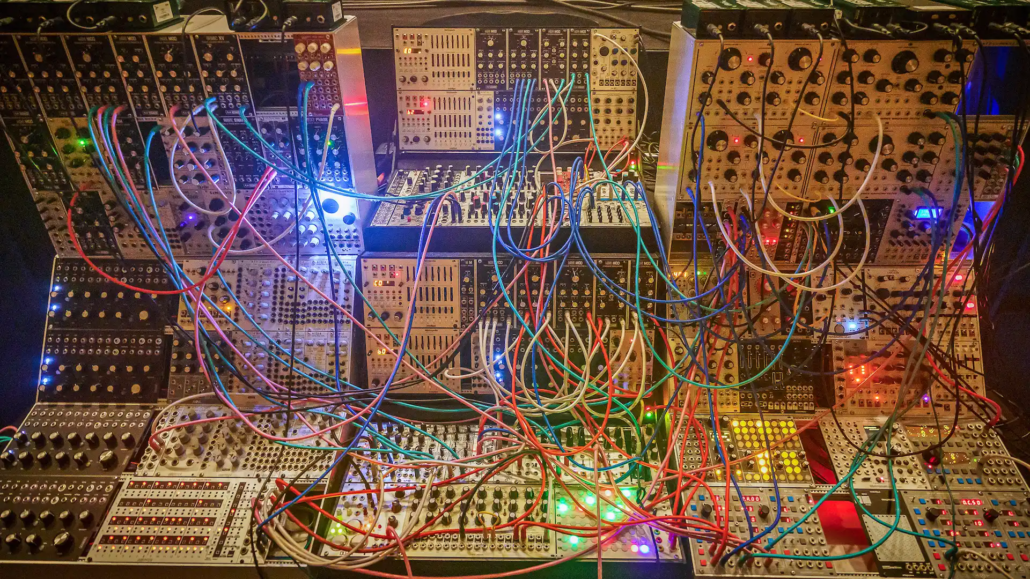
Before anyone could go into a store and buy a synthesizer, a handful of composers were making electronic music from test equipment, razor blades and borrowed tape machines. Many of the most important were women in electronic music’s first generation: Daphne Oram, Delia Derbyshire, Wendy Carlos, Suzanne Ciani and Éliane Radigue. Each turned the recording studio into an instrument.
Why the History of Electronic Music Is Incomplete
The usual history of early electronic music runs on a short list of famous men and machines: Pierre Schaeffer, Karlheinz Stockhausen, Robert Moog. However, this list is incomplete; women in music worked in radio studios and labs from the 1950s, often under rules that kept their names off the work. If we put them back into electronic music history, a sharper argument appears: the people who turned the studio into an instrument were the first names cut from the liner notes.
How Did the Recording Studio Become an Instrument?
From Capturing Sound to Composing With It
For decades, a studio’s job was documentation- capturing live sound as it was being produced. In 1948, Pierre Schaeffer flipped that in Paris with musique concrète, building pieces from recorded sounds he cut, reversed and reshaped. The tape itself became raw material.
Tape, Oscillators, and the Birth of a New Craft
Tape music needed tools nobody had designed for music. Composers borrowed oscillators built for test tones, ran tape loops at different speeds to shift pitch and spliced notes by hand. Studio composition was slow and physical. It was also open to people the music business had already turned away.
Who Was Daphne Oram and What Is Oramics?
Co-Founding the BBC Radiophonic Workshop
Daphne Oram joined the BBC as a music engineer and spent late nights experimenting with its tape machines. In 1958 she co-founded the BBC Radiophonic Workshop with Desmond Briscoe, then left about a year later to pursue her own ideas in a converted oast house in Kent.
Inventing a New Way to Draw Sound
Those ideas became Oramics. Oram painted shapes onto ten synchronized strips of 35mm film, and her machine translated them into pitch, volume and timbre. It was graphical sound synthesis decades before screens made the idea routine. The Oramics Machine now belongs to London’s Science Museum.
Why Is Delia Derbyshire More Than the Doctor Who Theme?
The Tape Manipulation Behind an Iconic Sound
In 1963, Ron Grainer handed the Workshop a melody for a new science fiction series. Delia Derbyshire realized it with no synthesizer and no keyboard, building each note from oscillators and white noise, changing tape speed to set pitch and splicing it all by hand. Grainer reportedly asked if he’d really written it. Her answer: “Most of it.” BBC policy kept Workshop staff anonymous, and she got no on-screen credit for the Doctor Who theme until 2013, 12 years after her death.
A Composer Working Before the Tools Existed
Derbyshire held a Cambridge degree in mathematics and music, yet Decca Records told her it didn’t employ women in its recording studios. She created sound for more than 200 BBC programs before leaving in 1973. After her death in 2001, 267 reels of tape surfaced in her attic, full of experiments that sound like early sketches of sampling and ambient music.
How Did Wendy Carlos Change What a Synthesizer Could Do?
Switched-On Bach and the Moog Breakthrough
Wendy Carlos worked closely with Robert Moog, giving musical and technical feedback as he refined his modular synthesizer. In 1968, Columbia released Switched-On Bach, produced with Rachel Elkind. The Moog synthesizer played one note at a time, so Carlos built every piece phrase by phrase on multitrack tape. The album reached the Billboard top 10 and won three Grammy Awards.
Proving the Synthesizer Was a Serious Instrument
Until then, the synthesizer mostly belonged to experimental music. Carlos proved it could handle counterpoint and phrasing, then moved into film scoring with A Clockwork Orange, The Shining and Tron. Play Wendy Carlos Switched-On Bach today and the precision still holds up, which was the whole point.
What Did Suzanne Ciani Bring to Electronic Sound?
The Buchla, Performance, and Sonic Branding
Suzanne Ciani found the Buchla as a music student at UC Berkeley and took a $3-an-hour soldering job in Don Buchla’s factory to get time on it. She played it as a performance instrument, and she was doing sonic branding before the term existed: the Coca-Cola “pop and pour,” Atari sounds, the Columbia Pictures intro.
Making a Career Out of Electronic Sound Design
When labels said there was no audience for her music, Ciani founded Ciani/Musica and sold sound design to advertisers and studios. In 1981 she scored The Incredible Shrinking Woman, widely cited as the first solo score by a woman for a major Hollywood film. Commercial work funded the experiments, and the experiments sharpened the commercial work.
Why Does Éliane Radigue’s Patience Matter?
The ARP 2500 and the Art of Slow Sound
Éliane Radigue studied with Pierre Schaeffer and assisted Pierre Henry, but her feedback pieces didn’t fit their aesthetic. In the early 1970s she settled on the ARP 2500 modular synthesizer and used it almost exclusively for about 30 years, coaxing out tones that shift so slowly you notice the change only after it happens. Call it drone music or ambient music. It was analog synthesis practiced with monastic patience.
A Singular Approach to Composition
Her three-hour Trilogie de la Mort, completed in the early 1990s, drew on Tibetan Buddhism and personal loss. Around 2000 she moved to acoustic instruments. Radigue died in February 2026 at 94, and the obituaries noted how long the wider world took to catch up.
How Did the Studio Itself Become a Compositional Tool?
The Shared Idea Connecting These Composers
Five composers, different decades and countries, one shared premise: the tape machine, oscillator and patch cable are where the music gets written. Oram drew sound. Derbyshire cut it. Carlos layered it. Ciani performed it. Radigue slowed it down until you could hear inside it.
Rethinking Who Counts as a “Musician”
If the studio is an instrument, the person running it is a musician. In the 1960s it was a question of status, and status tracked gender. Assistants and “special sound” staff did compositional work without composer credit, and many were women.
Why Were These Women Written Out of the Story?
How Music History Gets Told, and Who Gets Left Out
Music history tends to credit whoever built the hardware or whose name went on the record. Institutional anonymity, hiring that shut women out of studios and suspicion that electronic music wasn’t “real” composition did the rest. Avant-garde composition was already a niche. Being a woman in it made the niche smaller.
The Ongoing Work of Reclaiming Their Legacy
The Science Museum acquired the Oramics Machine. Caroline Catz’s film Delia Derbyshire: The Myths and the Legendary Tapes drew on the rediscovered reels. Lisa Rovner’s 2020 documentary Sisters with Transistors, narrated by Laurie Anderson, put Oram, Derbyshire, Ciani, Radigue and others in front of a new generation.
What These Pioneers Teach Music Students Today
Innovation, Experimentation, and Owning the Tools
Each of these composers learned her equipment well enough to misuse it on purpose. Modern music production puts a modular synthesizer and thousands of presets on a laptop. The lesson is to understand oscillators, envelopes and signal flow well enough to build the sound no preset offers. Music technology changes fast. Fundamentals age better.
Learn the Studio Like an Instrument
Oram, Derbyshire, Carlos, Ciani and Radigue didn’t wait for the right tools. They borrowed, bent or built them, and the studio became an instrument because they played it like one. Explore our on-campus Music Production and Audio Production programs or our online Music Production and Audio Production degrees, then request info or start your application.
Frequently Asked Questions
Who were the women pioneers of electronic music?
Key figures include Daphne Oram, Delia Derbyshire, Wendy Carlos, Suzanne Ciani and Éliane Radigue, along with Clara Rockmore and Laurie Spiegel. From the 1950s on, they shaped electronic music’s techniques and instruments, often without public credit.
What is Oramics and who invented it?
Oramics is a graphical sound synthesis method invented by Daphne Oram, co-founder of the BBC Radiophonic Workshop. Her machine read shapes painted onto 35mm film and converted them into sound.
What was Delia Derbyshire known for?
Delia Derbyshire realized Ron Grainer’s original Doctor Who theme in 1963 using oscillators, tape loops and hand-spliced tape. She created sound for more than 200 BBC programs.
Why is Wendy Carlos important to electronic music?
Wendy Carlos’ 1968 album Switched-On Bach showed the Moog synthesizer could play music with nuance and precision. It won three Grammy Awards and brought the synthesizer to a mainstream audience.
How did the recording studio become a musical instrument?
Composers used tape manipulation, oscillators, synthesizers and editing to create sounds no acoustic instrument could make. The studio became the place where music was composed, and these women were central to that shift.
Why were women written out of electronic music history?
Gender discrimination, studio hiring that excluded women, the BBC’s anonymity policy and skepticism toward electronic music all played a part. Documentaries, museums and scholarship have since restored much of their place in the story.
What can music students learn from these electronic pioneers?
Learn your tools deeply, experiment on purpose and treat technology as part of composition. These pioneers invented techniques because the equipment they needed didn’t exist yet.
