

Latin America Is Running the Animation Pipeline
Articles, BlogSit through the credits on an animated series and actually read them. Somewhere between the executive producers and the sound mixers, the same cities keep turning up: Mexico City, Bogotá, Buenos Aires, Santiago, Rio de Janeiro. That pattern took two decades of deliberate industry-building. Latin American animation is now one of the most important regional forces in the global film industry, and anyone mapping out where an animation career could happen should understand how it got here.
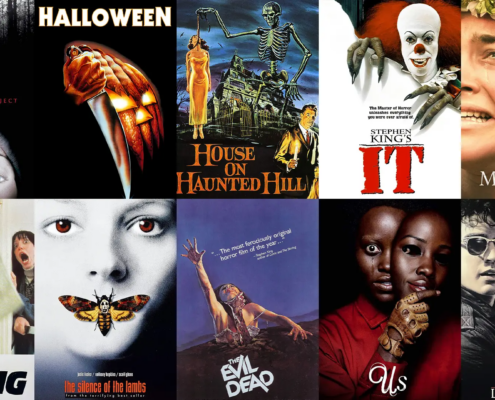
Designing Dread: The Visual Language of Horror Posters and Title Design
Articles, BlogA horror movie starts working on you before you buy the ticket. A one-sheet on a lobby wall, a thumbnail in a streaming row, a title card that splinters apart in the trailer: each one is built to raise your pulse before you see a single frame of the actual film. That's graphic design carrying the heaviest load in film marketing, selling a feeling with color theory, typography, and negative space. Horror movies have been running this play for decades. Here's how the genre's best key art pulls it off, and what horror poster design can teach anyone serious about visual design.

How to Read a Contract Without a Lawyer (And When to Get One)
Blog, ArticlesSomewhere between your first paid gig and your first real credit, a contract lands in your inbox. Nobody walks you through it. Maybe you're scoring a short, illustrating a festival poster, editing a podcast, or punching up a pilot. Either way, the moment you sign, your creative work becomes a business deal with rules attached. Learning how to read a contract doesn't require a law degree. It requires knowing what you're looking at, what's negotiable, and when to hand it to a professional. That's what this guide covers.

The Los Angeles Recording School Named to Billboard’s 2026 Top Music Business Schools List
Blog, Accolades, Articles, FeaturedBillboard has published its 2026 Top Music Business Schools list, and The Los Angeles Recording School, a division of The Los Angeles Film School, is on it again. The list runs alphabetically with no rankings. It covers programs that teach the business side of music: A&R, touring, marketing, licensing, and the rest of the machinery that gets a record from the studio to an audience.

Nobody Watches Alone: The Second Screen and How It Rewrote Exposition
Blog, ArticlesSomewhere right now, a character on a streaming series is announcing exactly what she plans to do next and why. The person watching is answering a text. Those two facts are related, and the relationship is changing how TV shows get written. “Second screen” viewing has reshaped dialogue density, recap strategy, and how often a plot point gets said out loud. For anyone studying screenwriting, the useful question is whether that shift is a compromise or one more adaptation in a medium that has always bent around its audience.

The Sound of Fear: How Horror Audio Manipulates Your Brain
Blog, ArticlesMute any of the great horror movies and the shark is a mechanical prop, the hallway is a hallway and the masked man is a guy in a mask. Turn the sound back on and your pulse climbs before anything moves. That gap is horror sound design at work, and it's one of the sharpest lessons in film sound.

How to Give a Critique That Actually Helps
Blog, ArticlesEvery crit session has that one moment. Someone says "I just don't like it," the room goes quiet, and nobody (including the person who said it) walks away knowing what to fix. That's not feedback. That's noise. If you plan to work in a creative field, expect to spend a lot of time in critique rooms: dailies, table reads, portfolio reviews, mix sessions, pitch meetings. Learning how to give a critique that's specific, fair, and usable is a craft skill, and it can be learned like any other.

The Series Bible: What a TV Writer Actually Brings Into the Pitch Room
Blog, ArticlesMost TV pitches are told out loud. The document behind them is the series bible, and it has to do in ten to twenty pages what a full season does on screen: prove the world holds up, the characters are worth living with, and the show won't run out of gas by episode six. Most TV writers learn how hard that is the first time a bible comes back with more notes than the pilot. Here's what belongs in the document, and what to know before you sit across from a development executive who has already heard plenty of pitches this month.
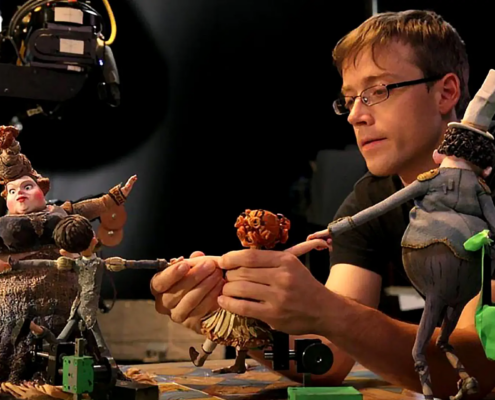
Subgenres of Animation Explained
Blog, ArticlesAsk ten people what animation looks like and you'll get ten answers: a desk lamp that hops, a Ghibli sky, a clay dog with a nervous owner, a logo that assembles itself before an ad. They're all right. Animation is a medium, and the subgenres of animation are the techniques inside it. Each has its own look, budget, and workflow. Here's what each one is, what it costs, and who does it best.
